Intake
The key to improving engine performance is the intake system. As an internal-
combustion engine requires approximately 14.7 parts of air for each part of
gasoline in the combustion chamber, getting enough quality air to the engine is
essential. By quality air, we mean the big three: cool, clean, and compact. Here
are some modifications you can do to give your heavy breathing engine all the
quality air it needs.
Air Filters
When driving on dirt or other dusty roads, dust particles are drawn through
the radiator and find their way into the engine if it is not filtered and cleaned.
Dust and other foreign materials in the engine will cause excessive wear and
operating problems. Air cleaners are made to separate dust and other particles
in the incoming air before it enters the carburetor. Thousands of cubic
feet of air are drawn from within the car hood and passed through the engine
cylinders, so it is important that the air is clean. One of the easiest and
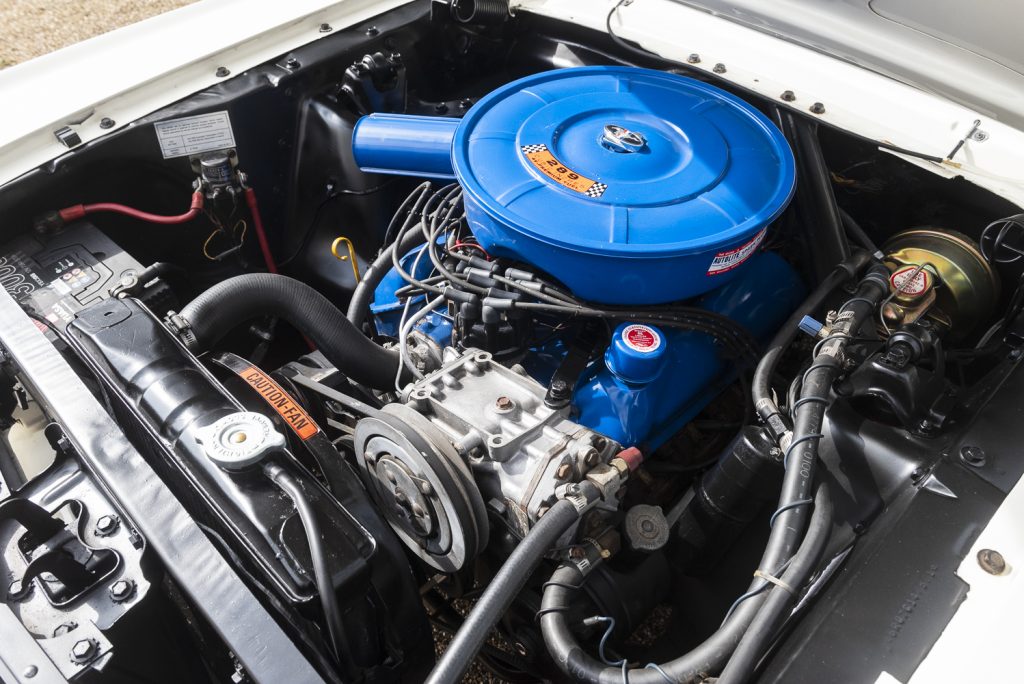
cheapest modification is to replace your stock paper air filter element
with a high performance one. Available from K&N and other companies for
around $100, these performance filters are often made of cotton and provide less
restrictive air flow while still filtering out particles in the air. Hot Rod
magazine tested a K&N air filter and found a 5 bhp increase at the wheels on
a 1996 Ford Mustang. Most of the horsepower gains is at higher RPMs when the
engine really benefits from the less-restrictive air flow. While not a
tremendous power gain, the filters' relatively low cost and ease of installation
(about 5 minutes) more than make up for it. Plus, performance air filters
last longer than cheap paper ones so you might actually come out ahead in the
long run.
Cold Air Induction
As any chemist knows, the colder that air is, the more dense it is, and denser air will
provide more oxygen in any given volume (i.e. inside the engine cylinder), allowing
your engine to burn more fuel and generate more power. A common rule of thumb is
that decreasing the air intake temperature by 10 degrees F will increase horsepower
and torque by 1%. The converse is also true. The problem with most stock engine
intake systems is that they consist of just a box with a filter located somewhere
in the engine bay where it fit. This box justs draws in the hot air from under
the car's hood and is probably not in the best place to draw cooler air.
Furthermore, they tend to be quite restrictive, in an attempt to reduce underhood noise.
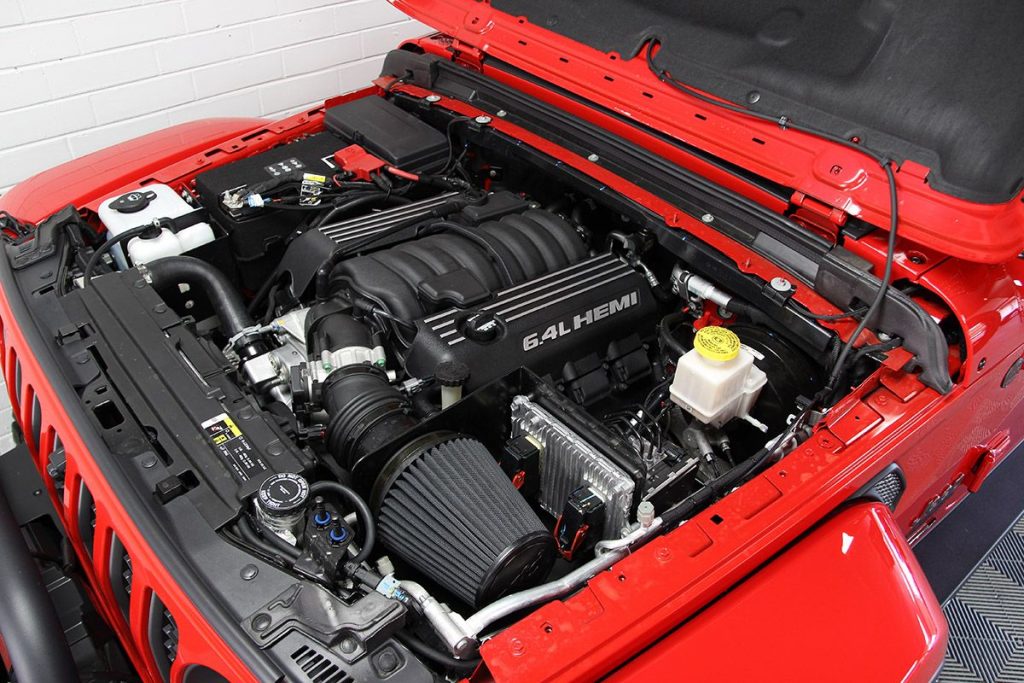
Aftermarket "short ram" air intakes (that look like a cone on a pipe) are less
restrictive and might provide a few more extra horsepower. However, they suffer
from the same problem as stock systems in that they draw in the underhood air.
Therefore, they work nicely after the car has been sitting overnight, but
actually decrease in performance once the engine (and thus under-hood temperature)
heats up. The better aftermarket systems try to locate their intake tip in an area under
the engine bay that might have cooler air, such as near the bottom of the car
or by the grille. This arrangement helps out by drawing slightly cooler air than
that generally found under the hood and thus results in more of a power gain.
The only way to solve the problem of hot under-hood air is to get air from
somewhere else. The solution is what is called a true cold air induction system,
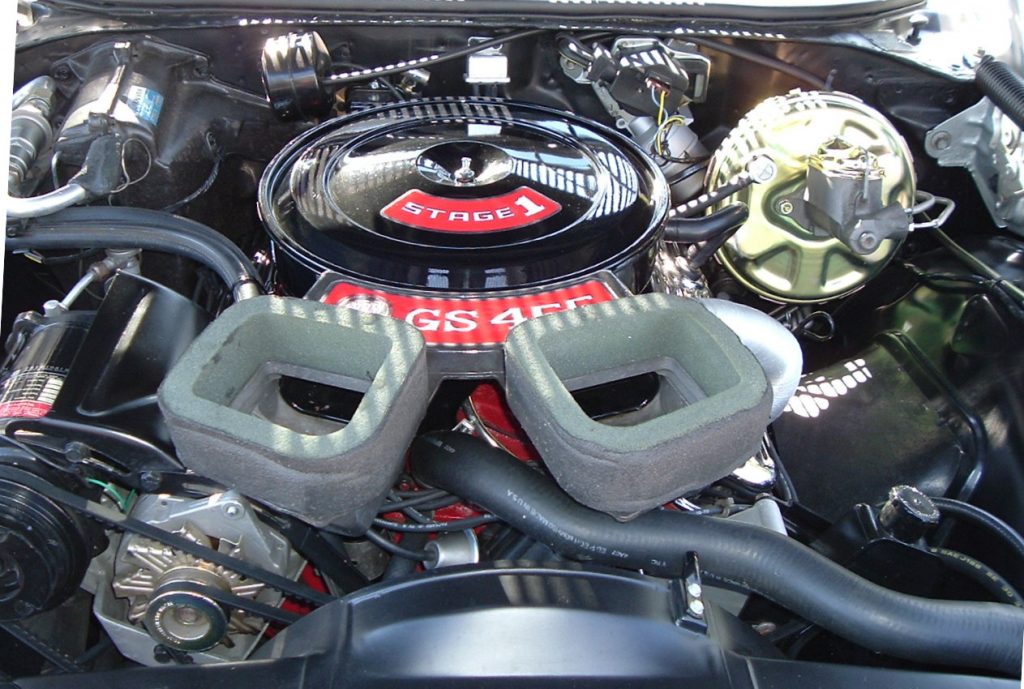
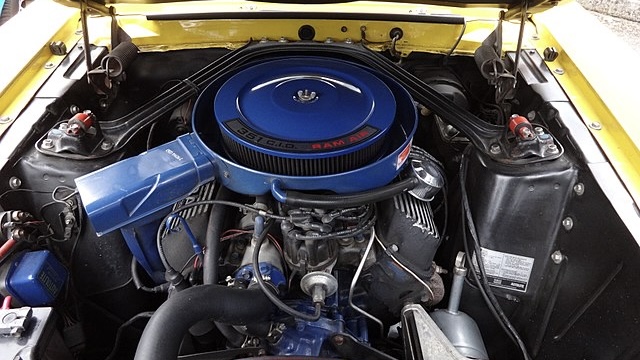
but is commonly called "Ram Air" (Pontiac invented that name). There
are two common techniques used by these systems. The first is to draw air from the
outside either through holes in the hood, or through openings in the grille into air ducts
that channel the air through the air filter and into the carburetor. In almost
all cases, the carb is sealed off from getting any air from under the hood. In fact,
you can easily stall the engine by covering the holes on the hood or grille that feed
the carb because the carb does not receive air from any other means. Oftentimes,
the hood vents will actually be scoops or are raised from the rest of the hood,
to capture air as it flows over the hood. Performance can be increased if these
scoops are at least 1" above the surface of the hood, because the air flows
faster than right at the hood's surface. Thus, the air flowing over the hood is
"ramed" into the scoops, through the air ducts, and into the engine. While most
scoops either point upwards or forward, Chevrolet pioneer their "Cowl Induction"
system which featured a backward facing scoop right at the base of the windshield.
This scoop actually received air that was forced backwards after hitting the windshield.
The second technique is to move the entire air filter & carb assembly out from
under the hood. The most common examples are Shaker hoods where the air filter
(usually in a protective and decorative cover) physically juts out of the hood
through a hole in the hood. Thus, the air is drawn directly from the outside,
without having to go through any piping. It is called a Shaker hood because the
air filter cover actually can be seen shaking as the engine vibrates. This
technique also has a greater benefit the higher off of the hood it is. Most high
performance race cars use this technique and, with carb risers, often have intake
systems 6" - 10" higher than the rest of the hood.
Intake Manifolds
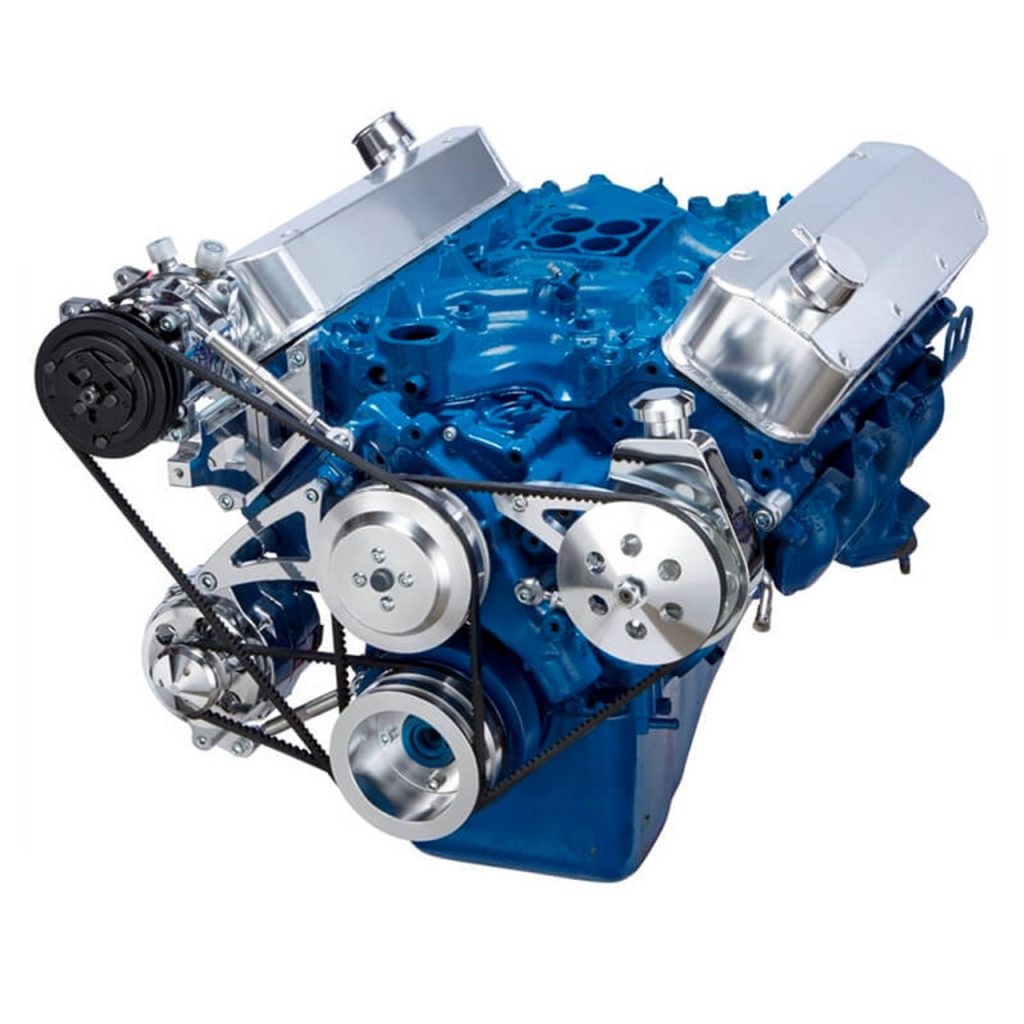
An intake manifold is a system of passages which conduct the fuel mixture from
the carburetor to the intake valves of the engine. Manifold design has much to
do with the efficient operation of an engine. For smooth and even operation, the
fuel charge taken into each cylinder should be of the same strength and quality.
Distribution of the fuel should, therefore, be as even as possible. This depends
greatly upon the design of the intake manifold. Dry fuel vapor is an ideal form
of fuel charge, but present-day fuel prevents this unless the mixture is subjected
to high temperature. If the fuel charge is heated too highly, the power of the
engine is reduced because the heat expands the fuel charge. Therefore, it is better
to have some of the fuel deposited on the walls of the cylinders and manifold vents.
Manifolds in modern engines are designed so that the amount of fuel condensing on
the intake manifold walls is reduced to a minimum.
In a V-8 engine, the intake manifold is mounted between the cylinder heads. The L-head
engine's manifold is bolted to the side of the block, and the I-head manifold is bolted
to the cylinder head.
There are two main types of Intake Manifolds for typical 4 barrel carbureted V8 engines.
A Dual Plane Manifold, named because it is split down the middle, separates the carb down
the middle so as to feed four cylinders from two barrels, and the other four from the other
two barrels. This type of manifold usually works best for an engine tuned to make lots of
torque at low RPM, for good driveability and pull off the line. The downside is that
dual plane intakes tend to become restrictive at high RPM. Single Plane Manifolds have a large
area under the carburetor, called a plenum, which draws air from all four barrels and then
distributes the air and fuel to all the cylinders. This arrangement works best under high
RPM applications, at the expense of low RPM driveability. Intake manifolds for fuel-injected
engines and intakes designed for In-line engines look very different from these two designs,
but all Intake Manifolds can be split into the two types: Ones that feed half the cylinders
separately are generally better at low RPMs while ones that feed all the cylinders
together are better at high RPMs. In addition, fuel injected engines have fewer fuel
distribution problems, and frequently use tuned intake runners to create standing waves
that help push air into the cylinders for more performance.
Ram Induction Manifolds
The ram induction manifold system consists of twin air cleaners, twin four-barrel
carburetors and two manifolds containing eight long tubes of equal length (four
for each manifold). This system was designed by the Chrysler Company to increase
power output by in the middle speed range (1800-3600 rpm). Each manifold
supplies one bank of cylinders and is carefully calculated to harness the
natural supercharging effect of a ram induction system. By taking advantage
of the pulsations in the air intake column caused by the valves opening
and closing, sonic impulses help pack more mixture into the combustion
chambers.
In the Chrysler system, the air-fuel mixture from each carburetor flows into a
chamber directly below the carburetor, then passes through the long individual
intake branches to the opposite cylinder bank. The right-hand carburetor
supplies the air-fuel mixtures for the left-hand cylinder bank, and the
left-hand carburetor supplies the right cylinder bank. The passages between
the manifolds are interconnected with a pressure equalizer tube to maintain
balance of the engine pulsations.
Manifold Heat Control
Most engines have automatically operated heat controls
which use the exhaust gases of the engine to heat the incoming fuel-air
charge during starting and warm-up. This improves vaporization and mixture
distribution. When the engine is cold, all of the exhaust gas is deflected
to and around the intake manifold "hot spot". As the engine warms up, the
thermostatic spring is heated and loses tension. This allows the counterweight
to change the position of the heat control valve gradually so that, at
higher driving speeds with a thoroughly warmed engine, the exhaust gases
are passed directly to the exhaust pipe and muffler.
In the ram induction system, there is a heat control chamber in each manifold
to operate the automatic choke and to heat the fuel mixture after warm-up.
A heat control valve in each exhaust manifold will by-pass the exhaust gas
through an elbow to the intake manifold heat control chamber. Heat outlet
pipes then carry the gas down to the "Y" connector under the heat control valve.
Heat control is regulated by a coiled thermostatic spring mounted on the
exhaust manifold. A counterweight is mounted on the other end of the heat
control valve shaft and this counterweight, in conjunction with the thermostatic
spring, operates to close and open the heat control valve.