Dodge Dart

Meet Chandler
Chandler has a bachelors and masters degree in history as well as a passion for classics and muscle cars. His education and historical knowledge makes him skilled at crafting highly detailed articles about America’s muscle cars and automotive history. His love of muscle cars is undeniable, with him seeking them out at every opportunity during his visits to auto shows and car meets. Chandler’s knowledge and enthusiasm towards automotive history make him a great asset to the Muscle Car Club community.
From 1960–1976, the Dodge Dart was a fantastic sports car and muscle car that could hang with the best of them. Dodge originally introduced the Dart as a full-size sedan in 1960, before making it a compact from 1963-on. From the beginning, Dodge stuffed the biggest engines they could inside the Dart, including the early 361 and 413 V8 Wedge engines. These were the muscle cars before there were muscle cars, and they performed and looked exceptional for their time. Eventually, the Dart would get such memorable models as the Demon, Sport, and Swinger, which had solid performance from 318, 340, 383, and 400+ cid big-block V8 engines. Read on to find out all about the Dodge Dart from 1960–1976, including specs, production numbers, engines, and more.
Dodge Dart Overview
The Dodge Dart spanned five generations from 1960–1976, with the first generation lasting from 1960–1962, and the second generation being the one-year 1963 Dart. The third generation lasted from 1964–1966, with the fourth going until 1969. Dodge produced the fifth generation Dart from 1970–1976, before retiring it. They briefly resurrected the moniker from 2013–2016, but it was poorly conceived and failed to sell.
The creation of the Dodge Dart was due to lots of reshuffling within the Chrysler organization. Dodge introduced the Dart as a replacement for the Plymouth full-size models, which were now being sold independently by the Plymouth brand instead of at Dodge dealerships. In addition, Chrysler also canceled the DeSoto brand, which was the top trim level. The Dart was created as an upscale full-size to fill the void left by the reshuffle.
The Dart was slightly smaller than the full-size Plymouths they replaced, and there were three trim options available: Seneca, Pioneer, and Phoenix. The car sat on a unibody platform, and Dodge sold more than 300,000 units in its first year. Dodge gave the Dart the powerful 318 and 361 cid V8 engines, the later of which had cross-ram induction intake manifolds that produced incredible performance. In 1962, Dodge gave the Dart the 413 Max Wedge V8, which used two quad-barrel carburetors to make over 400 horsepower.
The Dart GTS and the End
Probably the most memorable Dart was the 1968 Dart GTS, which lasted from 1968–1970. It used the 340 V8 “Scat pack” or the big-block 383 V8, and was made for racing. There were also limited versions with the 426 HEMI and 440 “Magnum” V8s. Other performance versions included the Dart Swinger, Dart Demon, and Dart Sport. None of them matched the power of the GT — save the 1971 Demon 340 — thanks to emissions cuts and detuning.
Dodge finally let the Dart go after 1976 in favor of the Aspen. They briefly resurrected the name in 2013 for a new compact, but it sold poorly and was prone to problems. Still, the original Darts from the ‘60s and ‘70s are highly collectible, especially those with the more powerful 318, 340, 383, 413, 426, or 440 V8 engines. Today, the Dart is fondly remembered for its iconic styling (in the early years) and outstanding performance, and is still Cherished by many.
1960–1966 Dodge Dart
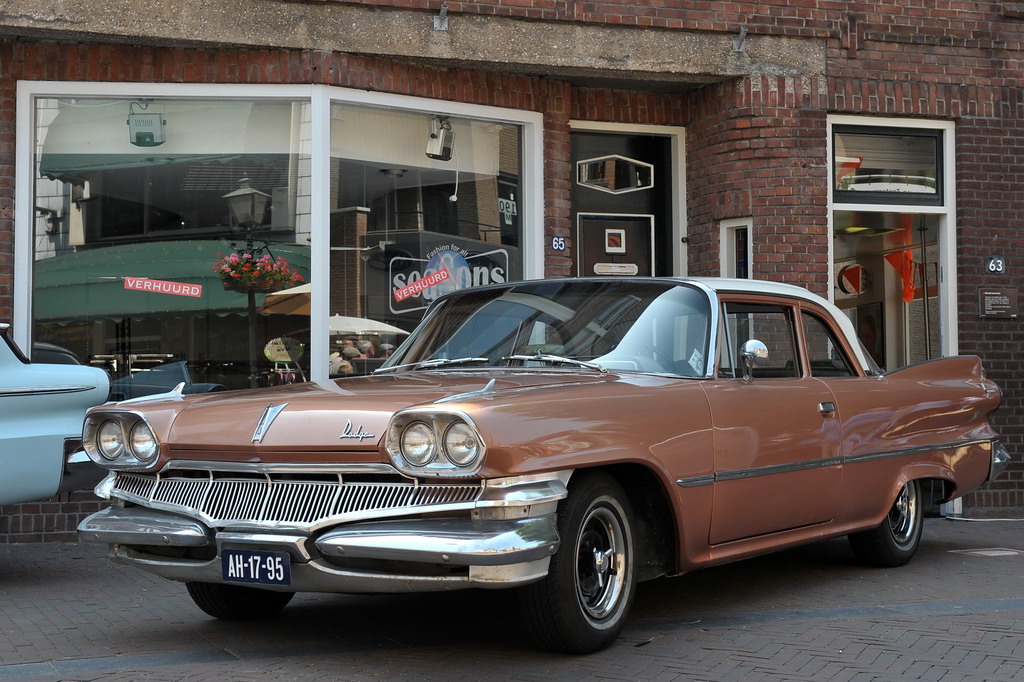
Dodge first introduced the Dart in 1956 as a show car that had incredible aerodynamic capabilities, but it was not until 1960 that customers would first have a chance to buy it. The Dart replaced the full-size Plymouth sedans, but rode on a 118 inch wheelbase which was 4 inches smaller. They still called it a full-size, but it was a “compact full-size.” Dodge sold three trims of the Dart: the Dart Seneca, Dart Pioneer, and Dart Phoenix — with the Phoenix being the top trim level.
The first generation 1960 Dart had big tailfins, chrome bezels on the headlights, a horizontal chrome strip from the wheel well to the rear bumper, enclosed tail lights, a grille with vertical bars, and the Dodge name in script on the lower right side of the trunk lid. Available body styles were a two or four-door sedan or a four-door station wagon.
The 1961 Dodge Dart got a face lift with reverse-slanted fins that looked like they grew out of the fenders. The vertical bar grille was now concave with a grid pattern and had quad headlights. The second generation Dart lasted for the 1962 model year. For the 1962 Dodge Dart, the wheelbase was 2 inches shorter and the overall length was 10 inches shorter. The grille again changed with uneven headlights introduced, new tail lights, new feature lines, and the Dodge name in block letters across the hood. In addition, the trim levels changed to the base, Dart 330, and Dart 440.
Third Generation Darts
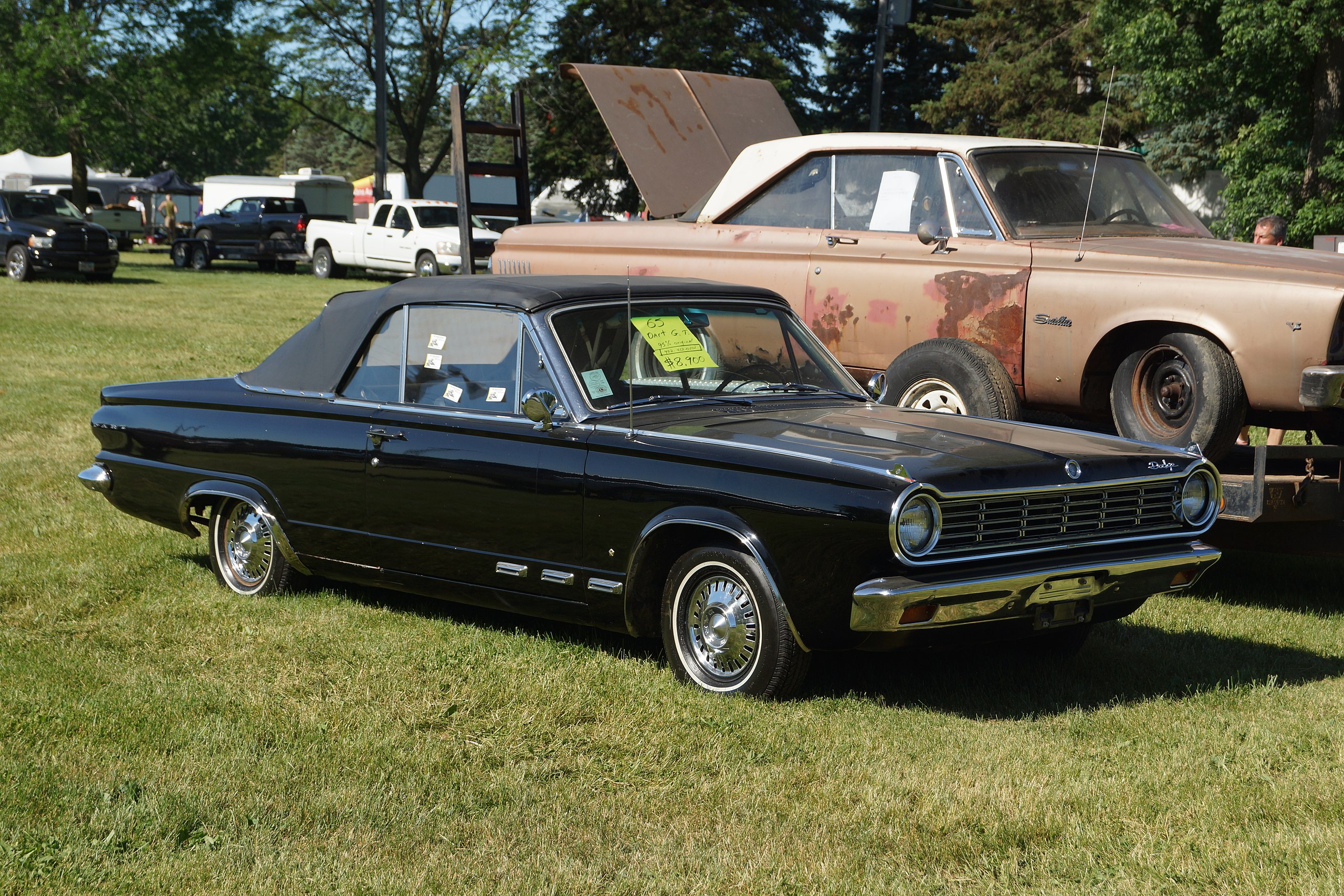
The third generation kicked off with the 1963 Dart, which moved to the A-body platform. It came in the 170, 270, and GT trim levels, as the 330 and 440 were their own models now. Dodge replaced the Lancer with the Dart as the new compact in the lineup, even though the Dart was actually 4.5 inches longer than it had been the year prior. Dodge also introduced a new convertible to the Dart lineup for the first time, but the styling was relatively similar.
Changes came in the 1965 Dart, which had a new flat grille and new oval tail lights instead of round ones. This year also saw the Dart Charger, which was basically a prelude to the stand alone Dodge Charger that would appear the next year. The Dart Chargers were basically Dart GTs in yellow that had special black interiors, the “Commando” 273 V8 engine, and Charger badges.
The 1966 Dart looked pretty much the same externally, and was the last year of the third generation. The first three generations of the Dart sold incredibly well, with Dodge producing more than 1.1 million units from 1960–1966. Still, even bigger things were on the horizon for the fourth generation, which kicked off in 1967.
1960–1966 Dodge Dart Engine Technical Specification
| Model Years | Engine | Horsepower | Torque |
| 1960-1966 | 225 cid I6 (1bbl) | 145 horsepower | 215 lb-ft |
| 1960-1962 | 318 cid V8 (2bbl) | 230 horsepower | 340 lb-ft |
| 1960-1961 | 318 cid V8 (2bbl) | 255 horsepower | 345 lb-ft |
| 1960 | 361 cid V8 (2x4bbl) (D500) | 310 horsepower | 435 lb-ft |
| 1961-1962 | 361 cid V8 (4bbl) (D500) | 305 horsepower | 395 lb-ft |
| 1961 | 383 cid V8 (2x4bbl) | 330 horsepower | 460 lb-ft |
| 1962-1966 | 170 cid I6 | 101 horsepower | 155 lb-ft |
| 1962 | 318 cid V8 (2bbl) | 260 horsepower | 345 lb-ft |
| 1962 | 413 cid V8 (2x4bbl) | 410 horsepower | 460 lb-ft |
| 1962 | 413 cid V8 (2x4bbl) | 420 horsepower | 470 lb-ft |
| 1964-1966 | 273 cid V8 (2bbl) | 180 horsepower | 260 lb-ft |
| 1965-1966 | 273 cid V8 (4bbl) | 235 horsepower | 280 lb-ft |
| 1966 | 273 cid V8 (4bbl) | 275 horsepower | 300+ lb-ft |
1960–1966 Dart Engines and Performance
For the 1960 Dart, Dodge offered three engines: A 225 cid “slant-six,” 318 cid V8, or a 361 cid V8. The slant-six was so-called because it was slanted towards the passenger side instead of standing straight up. This allowed for easier maintenance on the carburetor and spark plugs, and for the use of longer intake manifold runners, which helped increase power. The 225 put out 145 horsepower, and was the base option for the Dart.
The next step up was the 318 V8 Chrysler A-engine, which was marketed as the “Red Ram V-8.” It had 9.0:1 compression, and came with either a dual-downdraft carb on the Seneca or Pioneer making 230 horsepower, or a quad-barrel making 255 horsepower in the Phoenix.
The top of the line option was the 361 D-500 Ram Induction V8, which was from the Chrysler B-series of engines and put out 310 horsepower. It had higher 10.0:1 compression, dual exhausts, dual Carter quad-barrel carbs, and the famous “cross ram induction” intake manifold. This manifold had long 30 inch runners, which were designed to take advantage of pulse reversion and almost acted like a naturally aspirated supercharger.
In 1962, the 361 dropped one of its carbs and put out 305 horsepower, but was joined by the new big-block 383 cid V8. This still used the D-500 Ram induction manifold, had dual exhausts, and dual quad-barrel carbs, putting out 330 horsepower and 460 lb-ft of torque, and was only available with a manual transmission in the Darts.
The 413 Max Wedge and LA 273 V8s
For the 1962 Dart only, Dodge offered the big-block 413 Max Wedge V8. Dodge put two versions in the Dart: one with 11:1 compression rated at 410 horsepower and the other with 13.5:1 compression rated at 420 horsepower. It was so called because of the wedge shaped combustion chambers, which was in contrast to the HEMI style. The 413 had dual exhausts with cutouts, heavy duty valve springs, forged steel crankshaft and connecting rods, aluminum and lightweight pistons, a deep-sump oil pan, and high-flow headers. It also used dual Carter quad-barrels on a cross ram induction intake manifold with 15 inch runners.
Introduced in 1964, the “Commando” 273 V8 was the top of the line option after the 318, 361, 383, and 413 V8s disappeared after 1962. It was from the Chrysler LA series of engines, and produced 180–235 horsepower with either a dual or four-barrel carburetor.
However, the best version was the one-year-only 275 horsepower version of the 273 LA inside the “D/Dart.” Dodge took the already high performance Dart GT, stripped it down and added 40 horsepower to the engine. This increase was due to stronger Racer Brown valve springs; more aggressive 284 degree-duration, 0.500 inch-lift camshaft; high flow headers, Holley 4160 quad-barrel carb, A-838 four-speed manual transmission with a Hurst floor-shifter, Weber clutch, Sure Grip differential, and 4.86 gears. Dodge did not offer a warranty — or air conditioning — and it was hard to tell them apart from regular GTs.
1960–1966 Dart Production Numbers
| Model Year | Bodystyle | Production Total |
| 1960 | Dart | 306,603 |
| 1961 | Dart Seneca | 66,100 |
| Dart Pioneer | 38,600 | |
| Dart Phoenix | 37,300 | |
| 1961 Total | 142,000 | |
| 1962 | Dart | 48,200 |
| Dart 330 | 25,500 | |
| Dart 440 | 37,800 | |
| Dart Station Wagon | 24,400 | |
| 1962 Total | 135,900 | |
| 1963 | Dart 170 | 51,300 |
| Dart 270 | 55,300 | |
| Dart Station Wagon | 13,000 | |
| 1963 Total | 119,600 | |
| 1964 | Dart 170 | 70,200 |
| Dart 270 | 60,400 | |
| Dart Station Wagon | 12,900 | |
| 1964 Total | 143,500 | |
| 1965 | Dart 170 | 73,800 |
| Dart 270 | 62,800 | |
| Dart Station Wagon | 29,400 | |
| 1965 Total | 166,000 | |
| 1966 | Dart 170 | 29,800 |
| Dart 270 | 35,100 | |
| Dart Station Wagon | 29,300 | |
| Dart GT | 18,700 | |
| 1966 Total | 112,900 |
1967–1969 Dodge Dart
The fourth generation of the Dodge Dart lasted from 1967–1969. Dodge shortened the length by ½ inch, returned to the concave grille with single headlights, had more rounded sides, square tail lights, and the Dodge block script on the hood. Gone was the Dart 170 trim, as it just reverted to the base Dart, with the 270 and GT trims still available. Little changed for the 1968 Dart externally. Like usual, the GT had better suspension, bucket seats, power tops for the convertible, wide oval red streak E70-14 tires, and an engine dress-up kit.
For 1968 (actually introduced at the end of 1967), the Dart received a new GTS (GT + 383 V8 = GTS) trim level to go along with the GT. It featured even more heavy duty suspension improvements, reduced curb weight, floor-mounted Hurst shifted four-speed, racing stripes, and a bulged (“power bulge”) and vented hood. The 1969 Dart received a new grille and new window moldings, but otherwise looked basically the same as the year prior.
However, the 1969 Dart also got a few new memorable trim levels, the Swinger and Custom. The Swinger was a sports performance “economy” car, and the Swinger 340 was the highest performance version with the 340 engine and Rallye suspension. The Custom was the new intermediate level trim, basically replacing the 270 from the year prior. GTS models had a Bumblebee stripe across the trunk lid and on the sides.
1967–1969 Dodge Dart Engine Technical Specifications
| Model Years | Engine | Horsepower | Torque |
| 1967-1969 | 170 cid I6 | 115 horsepower | 155 lb-ft |
| 1967-1969 | 225 cid I6 (1bbl) | 145 horsepower | 215 lb-ft |
| 1967 | 273 cid V8 (2bbl) | 180 horsepower | 260 lb-ft |
| 1967 | 273 cid V8 (4bbl) | 235 horsepower | 280 lb-ft |
| 1967 | 383 cid V8 (4bbl) | 280 horsepower | 400 lb-ft |
| 1968-1969 | 273 cid V8 (2bbl) | 190 horsepower | 260 lb-ft |
| 1968-1969 | 318 cid V8 (2bbl) | 230 horsepower | 340 lb-ft |
| 1968-1969 | 340 cid V8 (4bbl) (Scat Pack) | 275 horsepower | 340 lb-ft |
| 1968-1969 | 383 cid V8 (4bbl) | 300 horsepower | 400 lb-ft |
| 1968 | 426 cid V8 (2x4bbl) (HEMI) | 425 horsepower | 490 lb-ft |
| 1968-1969 | 440 cid V8 (4bbl) | 375 horsepower | 490 lb-ft |
| 1969 | 383 cid V8 (4bbl) | 330 horsepower | 410 lb-ft |
1967–1969 Dart Engines and Performance
Dodge carried over the same “Commando” 273 V8 from the prior generation for the 1967 Dart, but also brought back the 383 cid V8 again making 280 horsepower. Only 458 versions of the 383 equipped Dart GTS were made, but they are very collectible today. However, really exciting things were brewing, and the next year Dodge would unleash a plethora of outstanding engines inside the Dart. For many, the 1968 Dodge Dart was the best, due to its iconic styling and incredible lineup of optional engines, ranging up to 440 cid in displacement.
Besides the six-cylinders and the carry-over 273 “Commando” V8, the least powerful option was the 318 V8 making 230 horsepower with a Stromberg WW3-258 double-barrel carburetor. The next step up horsepower-wise was the 340 “Scat Pack” V8. The “Scat Pack” 340 made 275 horsepower and 300 lb-ft of torque with dual exhausts and premium fuel. It was only available in the Dart GTS (which now meant GTSport), and was the top of the line production engine. It actually out performed the 383 due to its lighter weight and rumored 300+ horsepower rating.
The Big-Block Options
The big-block 383 V8 pushed out 300 horsepower, but was actually not as fast as the 340 due to its much heavier weight, which hurt performance a bit. Yet, the 383 still paled to both the 426 HEMI and 440 “Magnum” V8s that were limited options. Only 80 of the 426 HEMI Darts were made, and they produced 425 horsepower through dual quad-barrel carburetors. These were drag racers pure and simple and had no warranty. They had a fiberglass hood with a functional scoop and hood pins, lightweight doors and thin window glass, and a somewhat stripped interior.
From 1968–1969, Dodge also equipped a very limited number of Dart GTS with the huge 440 “Magnum” V8 engine making 375 horsepower. Norman Kraus, a Chicago Dodge dealer, created the first version in 1968, which Mopar made in limited numbers over the next two years. It had stripped options and only used the three-speed 727 TorqueFlite automatic transmission. It ran the ¼ mile in the mid-13s, but could run 12s when slightly modified.
1967–1969 Dart Production Numbers
| Model Year | Bodystyle | Production Total |
| 1967 | Dart | 53,100 |
| Dart 270 | 63,200 | |
| Dart GT | 38,200 | |
| 1967 Total | 154,500 | |
| 1968 | Dart | 60,300 |
| Dart 270 | 76,500 | |
| Dart GT | 35,000 | |
| 1968 Total | 171,800 | |
| 1969 | Dart | 86,400 |
| Dart Swinger | 20,000 | |
| Dart Custom | 63,700 | |
| Dart GT | 20,900 | |
| Dart GTS | 6,700 | |
| 1969 Total | 197,700 |
1970–1976 Dodge Dart
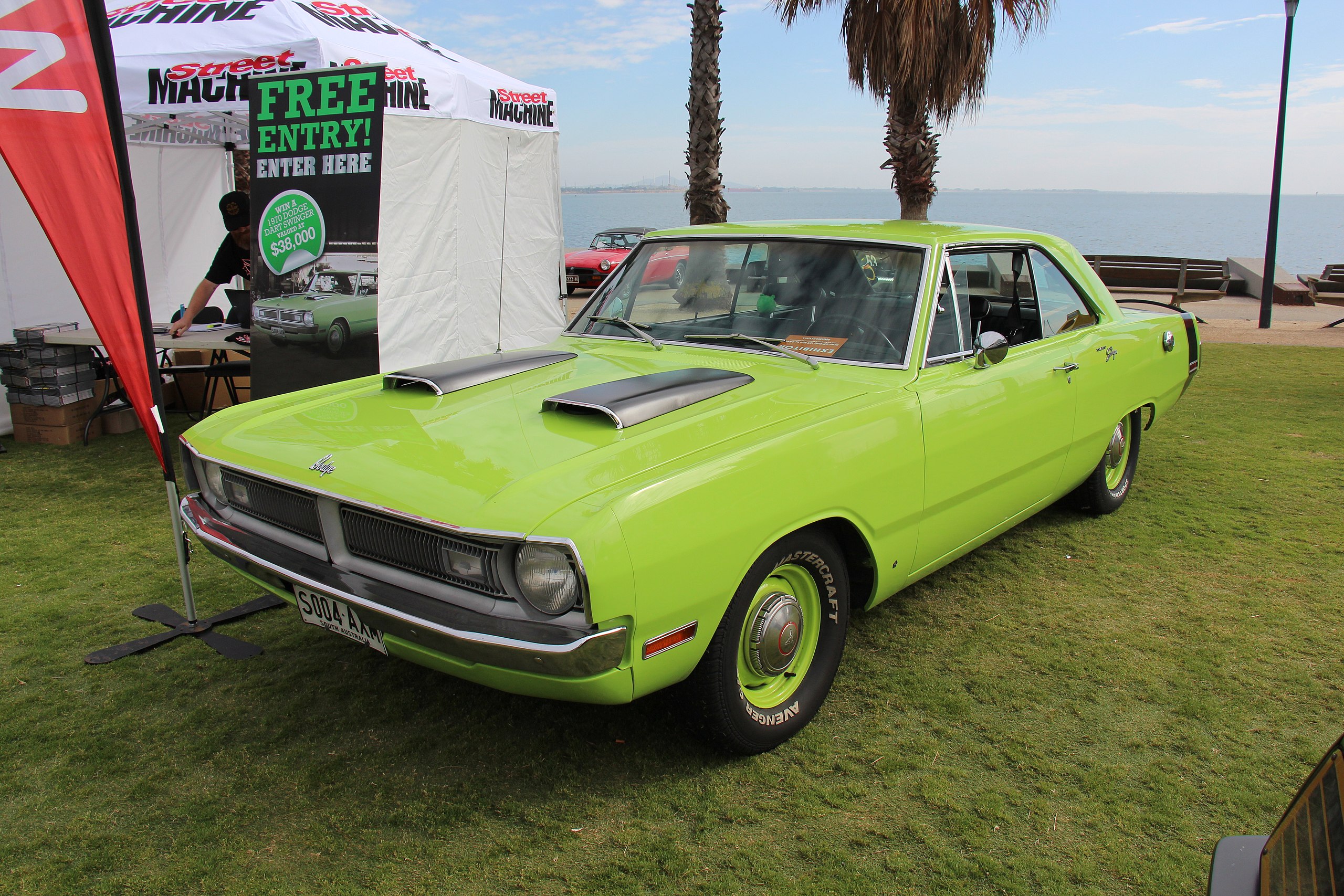
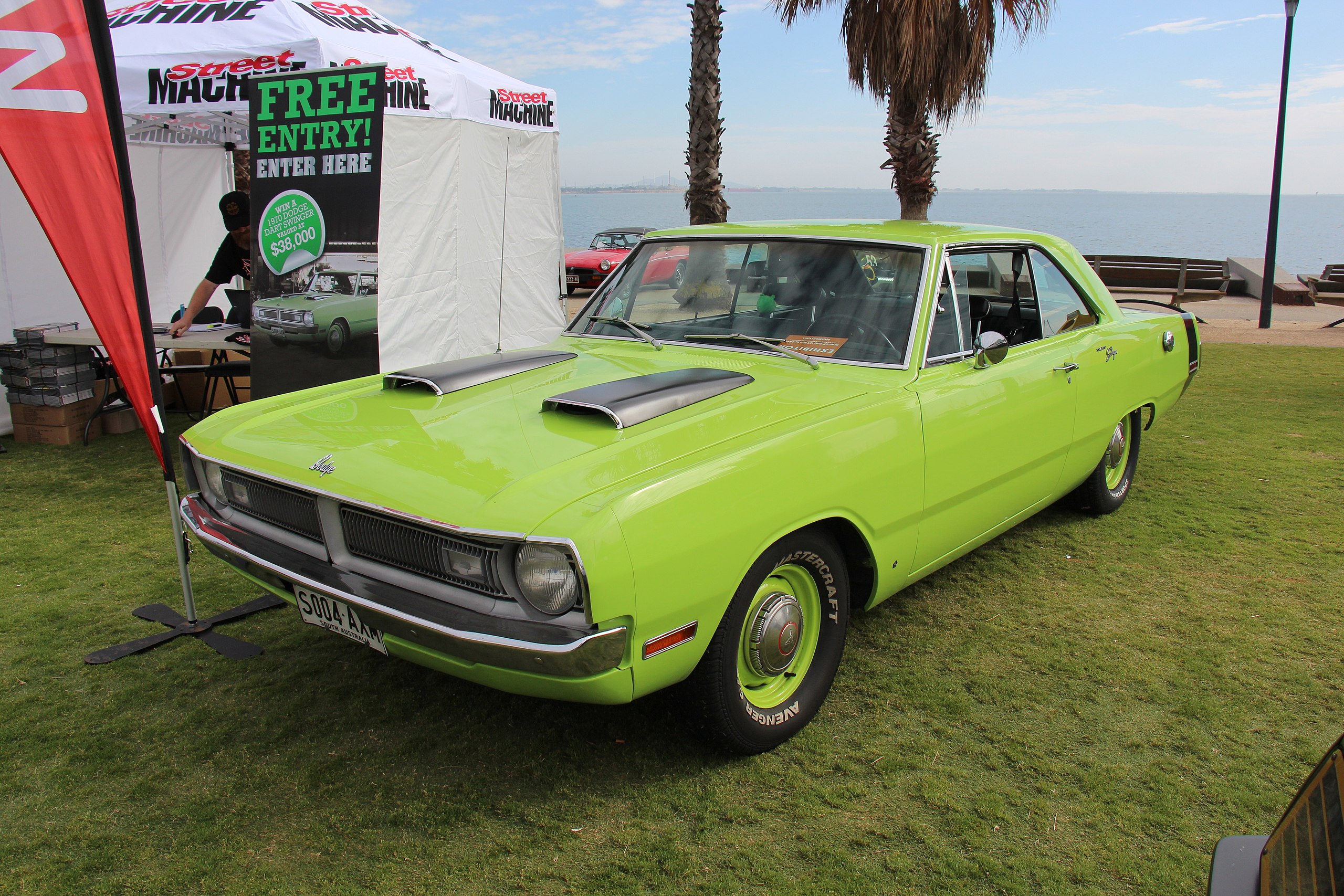
The final generation of the Dodge Dart lasted from 1970–1976. Dodge slightly restyled the front and rear ends for 1970, giving them a more aggressive rake, sloped grille, sloped back, and a bumper that had the tail lights inserted. The GT/GTS was no longer a stand alone trim but was only available as an option for the Custom hardtops. 1971 saw the introduction of the Dart Demon series, which was based on the Plymouth Duster A-body.
Contrary to popular belief, the Demon was actually the base package for the Dart. It came standard with the six-cylinder 198 cid engine, but the Demon 340 had the top of the line 340 V8. There was also the Demon “Sizzler,” which included hood stripes, rallye wheels, racing mirrors, and a special steering wheel.
Dodge made few changes for 1972, but the 1973 Darts got a restyled front-end and grille which bulged forward. The Dart Demon became the Dart Sport, and the Dart Sport 340 was still the performance version, with the Swinger and Custom continuing as the intermediate and top trim options.
In 1974, Dodge again switched things up, this time replacing the Dodge Sport 340 with the Dodge Sport 360, which reflected the bigger displacement engine. There was also the new Special Edition Dart, which was basically a luxury version of the Custom. For 1976, the Special Edition moved to the Swinger.
Even though sales were strong during most of the 1970s, Dodge discontinued the Dart after 1976 in favor of the Dodge Aspen. Sales had dropped drastically that year, and there was not as much enthusiasm for the Dart as years past. There was a brief resuscitation in 2013–2016, but the name has been dormant since.
1970–1976 Dodge Dart Engine Technical Specification
| Model Years | Engine | Horsepower | Torque |
| 1970-1971 | 198 cid I6 (1bbl) | 125 horsepower | 180 lb-ft |
| 1970-1971 | 225 cid I6 (1bbl) | 145 horsepower | 215 lb-ft |
| 1970-1971 | 318 cid V8 (2bbl) | 230 horsepower | 320 lb-ft |
| 1970-1971 | 340 cid V8 (4bbl) | 275 horsepower | 340 lb-ft |
| 1972 | 198 cid I6 (1bbl) | 100 horsepower | 160 lb-ft |
| 1972 | 225 cid I6 (1bbl) | 110 horsepower | 185 lb-ft |
| 1972-1974 | 318 cid V8 (2bbl) | 150 horsepower | 260 lb-ft |
| 1972-1973 | 340 cid V8 (4bbl) | 240 horsepower | 290 lb-ft |
| 1973-1974 | 198 cid I6 (1bbl) | 95 horsepower | 150 lb-ft |
| 1973-1974 | 225 cid I6 (1bbl) | 105 horsepower | 185 lb-ft |
| 1974 | 360 cid V8 (4bbl) | 245 horsepower | 320 lb-ft |
| 1975 | 225 cid I6 (1bbl) | 90 horsepower | 165 lb-ft |
| 1975 | 318 cid V8 (2bbl) | 140 horsepower | 250 lb-ft |
| 1975 | 360 cid V8 (4bbl) | 230 horsepower | 300 lb-ft |
| 1976 | 225 cid I6 (1bbl) | 100 horsepower | 170 lb-ft |
| 1976 | 318 cid V8 (2bbl) | 145 horsepower | 250 lb-ft |
| 1976 | 360 cid V8 (4bbl) | 220 horsepower | 280 lb-ft |
1970–1976 Dart Engines and Performance
Through the 1973 model year, Dodge kept the same lineup of engines in the Dart. However, from 1972-on they had to start listing horsepower ratings in terms of SAE Net instead of SAE Gross, which dropped numbers big-time. In addition, more restrictive emissions caused drops in compression ratios, which necessitated detuning and also hurt performance. This gutted the 318 from 230 Gross horsepower to 150 Net horsepower, and dropped the 340 down from 275 Gross horsepower to 240 Net horsepower.
In 1974, Dodge brought out the 360 cid V8 as the replacement for the 340. This was the E-code version which used dual exhausts, a four-barrel carburetor, and 340 heads, which produced 245 horsepower. This was from the same LA series as the 273, 318, and 340 V8 predecessors. Power dropped in the 360 V8 to 220 horsepower by 1976, the final year of the Dart. It’s unfortunate the Dart did not have a proper send-off with a powerful big-block, and things only seemed to have gotten worse from 1971-on.
1970–1976 Dart Production Numbers
| Model Year | Bodystyle | Production Total |
| 1970 | Dart | 191,986 |
| 1971 | Demon | 69,861 |
| Demon 340 | 10,098 | |
| Dart Four-Door | 32,711 | |
| Dart Two-Door | 13,485 | |
| Dart Swinger | 102,480 | |
| Dart Custom | 21,785 | |
| 1971 Total | 250,420 | |
| 1972 | Demon | 39,880 |
| Demon 340 | 8,700 | |
| Dart Four-Door | 26,019 | |
| Dart Two-Door | 19,210 | |
| Dart Swinger | 119,618 | |
| Dart Custom | 49,941 | |
| 1972 Total | 263,368 | |
| 1973 | Dart Sport | 68,113 |
| Dart Sport 340 | 11,315 | |
| Dart Four-Door | 21,539 | |
| Dart Two-Door | 17,480 | |
| Dart Swinger | 107,619 | |
| Dart Custom | 62,626 | |
| 1973 Total | 288,692 | |
| 1974 | Dart Sport | 63,518 |
| Dodge Swinger | 89,242 | |
| Dodge Custom | 78,216 | |
| Special Edition | 12,385 | |
| 1974 Total | 243,361 | |
| 1975 | Dodge Dart | 164,434 |
| 1976 | Dodge Dart | 27,849 |
| Dart Sport | 13,642 | |
| Dart Swinger | 8,937 | |
| Dart Swinger Special | 3,036 | |
| 1976 Total | 53,464 |
Dodge Dart FAQ
For many, the 1968 Dodge Dart was the best year, due to its iconic styling and incredible lineup of optional engines, ranging up to 440 cid in displacement. The best versions had the 340 Scat Pack, 426 HEMI, or 440 Magnum V8 engines.
Dodge made the Dart from 1960–1976, producing more than two million versions.
The Dodge Dart bordered on being a muscle car, especially when equipped with the big block 383, 413, 426, and 440 V8 engines. However, it was mainly a high performance sports car that doubled as a muscle car.