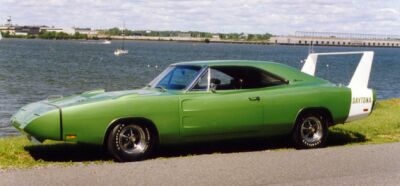
When it comes to muscle cars that defined the 1960s, it is impossible to leave out the Mopar “Wing Cars.” Prior to 1969, aerodynamics in racing series like NASCAR wasn’t considered to be a make-or-break aspect of car design. Form over function dictated the design of most muscle cars at the time. All of that changed in the 1969 NASCAR season when Dodge rolled out the Charger Daytona which was unlike anything that anyone in Talladega had seen before. Between its two-foot rear wing and shin-breaking wedge nose cone, the Daytona looked fitter for a space flight than a stock car race.
The Dodge Charger Daytona made a mark on the muscle car world that can still be felt and seen today. Despite only racing for two years, between 1969 and 1970, the Daytona became such a dominant force that the NASCAR governing body had to intervene in fear of the Daytona’s complete dominance. In this article, we’ll cover the famed Dodge Charger Daytona, one of the first no-nonsense function-over-form muscle cars to compete in NASCAR, setting numerous records in the process.
Dodge Charger Daytona History
To understand the Dodge Charger Daytona’s envious legacy, there’s one thing that you have to understand first. In the late 1960s, and still, to this day, Daytona, Florida was the holy land for American car manufacturers. The Daytona 500 was the proving ground for any top model coming out of Detroit, with all gloves off. Dodge and Ford were embroiled in a battle for supremacy in the late 1960s, with both manufacturers bringing heavy hitters to the track. In 1968, Dodge released the second generation Charger. The second generation Dodge Charger was built on the Chrysler-B platform, which it shared with the Dodge Dart, Plymouth Belvedere, and other iconic Detroit-born cars.
There’s no question that the second-generation Dodge Charger was an attractive car. Between its minimal but graceful body lines and menacing inset grille, Richard Sias did a very nice job with the pen. With that being said, the flat frontal facade was a far cry from aerodynamic. Believe it or not, that is a massive factor in competing near the top in high-speed racing series. For the 1968 NASCAR series, the second-generation Charger competed with factory bodywork and was blitzed by Ford. The domination led to the departure of Richard “The King” Petty, the best driver on the track at the time. While an embarrassing defeat, it made Dodge take a closer look at their car’s design and the NASCAR rulebook itself.
1969 Charger Daytona
For the 1969 NASCAR season, Dodge was back and out for blood. The 1969 NASCAR series was an arms race against air resistance, as the importance of aerodynamics began to dictate the design of cars like the Dodge Charger and Ford Torino more than it ever had. Dodge introduced the new Dodge Charger Daytona for the start of the 1969 NASCAR season. It was an impossible car to ignore, with a massive 23-inch stabilizing wing in the rear and a wedge-shaped nose cone that transformed the Charger completely. The new design looked like speed. It turns out that speed was the Daytona’s forte, as it was the first car to ever reach 200 miles per hour on a NASCAR circuit.
Whether they knew it or not, the 1960s muscle car era was about to come to an abrupt end. One of the first major changes to the sport came in 1971, when NASCAR officially banned the use of aero-aiding components on vehicles with over 305 cid of displacement. That made the 1970 Dodge Daytona ineligible to compete in its original form. As a result, Dodge was forced to retire the Daytona for the 1971 season.
1969 Dodge Charger Daytona Specs
The 1969 Dodge Charger Daytona came with two engine options including the Dodge 440 Magnum engine and the 426 Hemi V8. The standard Dodge 7.2L Magnum was the more common engine option for the Daytona, which is reflected in the production numbers. In total, 503 Charger Daytonas were built between 1969 and 1970, with 433 440 Magnum examples and just 70 426 Hemi examples rolling off of the assembly line.
Neither of the Daytona’s engine options were underwhelming. The standard Chrysler 440 powerhouse is the largest big block engine in Chrylser’s RB wedge V8 engine series. Prior to the Chrysler RB series, Chrysler was known for their Hemi engines, which we’ll get into in a second. All of the Chrysler RB engines feature a five-bolt main arrangement with a deep skirt design to prevent excessive flex, ultimately making the Chrysler big block V8 series very durable. Due to the fact that the 440 Magnum is a short-stroke engine, it is very torque-heavy and produces most of its power near the top of the rev range. That is an ideal arrangement for both drag and circuit racing.
While the 440 Magnum is an undoubtedly monstrous engine, it was the less powerful of the two Charger Daytona engine options. The 440 Magnum V8 was factory rated at 375 horsepower at 4,600 RPM and 482 lb-ft of torque, catapulting the Daytona to 60 miles per hour in 6.2 seconds and to the quarter mile in 13.7 seconds.
The 426 Hemi Dodge Charger Daytona is one of the holy grails of the muscle car community. Due to the fact that there were only 70 ever produced, their rarity has made the 426 Hemi Daytona one of the most expensive collectors cars in the category. The V8 426 Hemi was designed from the offset to be a race engine. The 426 Hemi was Mopar’s second attempt at creating an engine with a hemispherical combustion chamber design, following the success of the first generation FirePower “Hemis” from the 1950s.
The Hemi V8 design is unlike most other internal combustion engines on the market. In comparison to a normal ICE with a flat-top combustion chamber, the top of a Hemi’s combustion chamber is a half-sphere. The advantage of this hemispherical design is a lower internal combustion chamber surface area. By decreasing the surface area inside the 426 Hemi’s combustion chambers, less heat is allowed to dissipate. This increases the 426 Hemi’s overall thermal efficiency and peak pressure.
426 Street Hemi vs 426 Race Hemi
Over the course of the 426 Hemi’s lifecycle, it was offered in two broad specifications. Those included both the race variant and the street variant. There were some significant differences between the engines, primarily for the benefit of customers, as a race engine would make driving the Daytona a nightmare on the streets. The race Hemi had an extremely high 12.5:1 compression ratio. Which, while optimal if race fuel is available, would’ve been an issue for those that couldn’t get high-octane fuel.
The race 426 Hemi was also equipped with an aggressive race cam which isn’t ideal for low-speed driving. As a result, the street Hemi received low-compression pistons to reduce the compression ratio to 10.25:1. It was also outfitted with a less aggressive cam to make it more street-able. The 426 Hemi was available for purchase in the 1969-1970 Dodge Charger Daytona in “street Hemi” configuration.
Other 1969 Dodge Charger Daytona Notable Features
Regardless of the engine option, the Charger Daytona was built on the second-generation Dodge Charger R/T platform which came with additional performance-enhancing goodies that didn’t come standard on other Charger models. For instance, all Dodge Charger Daytonas came with upgraded suspension and disc brakes.
Dodge Charger Daytona Aerodynamics
Obviously, advanced aerodynamics was one the Charger Daytona’s defining characteristics. Prior to the 1969 season, aerodynamics did play a role in NASCAR, but nowhere near to the extent that they appeared that year. Funny enough, two ex-rocket designers were brought onto the Chrysler team to aid in aerodynamic research for the Daytona, which eventually led to the practical, if not a bit ugly, aerodynamic add-ons.
Hands down, the most obvious of the Charger Daytona’s aerodynamic features is its massive 23-inch wing. The wing values function over form, providing an additional 600 lbs of downforce to the rear of the car. The wing itself is comically large due to the fact that the engineers wanted the wing to extend above the dirty air generated by the cars in front.
The other very noticeable visual feature of the Dodge Charger Daytona is the wedge-shaped front nose cone, which is a far cry from the standard Charger’s squared off front facia. The addition of the nose cone cut drag significantly while also providing over 1,200 pounds of downforce over the front of the car, pushing it into the pavement.
Other elements of the Charger that were redesigned for aerodynamic effect were the front fenders and rear windshield. Each of the front fenders on the Daytona featured reverse air extractor scoops which served the purpose of collecting air flowing over those sections of the car to reduce lift. Additionally, the rear windshield was revised to be flush with the rear C-pillars of the car. The Charger’s original C-pillar design hampered airflow over the rear of the car, causing poor aerodynamic performance.
Dodge Charger Daytona vs The Competition
Overall, the design team at Dodge was successful in building a car that would destroy the competition in NASCAR. The 1969 Dodge Daytona would go on to win its inaugural race at the Talledega 500. It would go on to win five more races between the 1969 and 1970 NASCAR season. The Dodge Daytona set multiple records on track, including the first car to hit 200 mph at the hands of Buddy Baker, and multiple off-track land speed records as well.
The Dodge Daytona’s success led the way for other manufacturers to enter their own wing cars into the mix. Sharing the Chrysler B-body platform with the Dodge Charger Daytona, Plymouth released the Superbird for the 1970 NASCAR season. The Plymouth Superbird was even more successful during the 1970 season, winning 8 races.
In terms of the competition, Ford and Mercury both ran aerodynamically-focused cars in the 1969 and 1970 seasons as well. The Ford Torino was a force to be reckoned with in the years leading up to the wing wars. It would go on to win 16 races in 1968. For the 1969 NASCAR season, Ford released the Ford Torino Talladega. The revised Torino featured an extended front facia and lowered stance to aid with aerodynamic efficiency.
While the Ford cars were slipperier on the track, they lacked the downforce from a rear wing like the 1969 Daytona and 1970 Superbird. Mercury, as a Ford brand, also introduced a more aerodynamically sound version of their NASCAR entry, the Cyclone. The updated version bore a striking resemblance to the Ford Torino, and was essentially the same car. Like the Torino, the Cyclone was extended and lowered for less aerodynamic drag.
While the Dodge Charger Daytona was a fierce competitor on the track, the Ford cars were ultimately too good to be beaten. The Charger Daytona was able to win two races in its inaugural year in NASCAR, but was severely eclipsed by the Ford Torino, which won an impressive 29 races during the 1969 and 1970 NASCAR season.
Later Dodge Charger Daytona Models
In 2006, 36 years after the original Dodge Charger Daytona was released, Dodge announced a limited run of another Charger brandishing the Daytona name. Like the original 1969 Dodge Charger Daytona, the 2006 Charger Daytona R/T was available with a Hemi, albeit a smaller one. The 5.7L Hemi in the 2006-2009 Charger Daytona produced 350 horsepower and 390 lb-ft of torque, making it a very respectable beast at the time. While the later Daytona lacked a 23-inch wing, it did feature a mild trunk spoiler, heritage paint options, Daytona and Hemi decals, and an exclusive interior. It also received suspension and handling upgrades as well.
2013 Dodge Charger Daytona
In 2013, another Dodge Charger Daytona model was released, built on the seventh-generation Charger’s chassis. Like the Charger Daytona that was released in 2006, the 2013 Charger Daytona also featured a 5.7L Hemi V8. Somewhat surprisingly, the newer model only received a slight power increase to 370 horsepower and 395 lb-ft of torque. Like the previous model, the seventh-generation Charger Daytona received top-of-the-line performance and handling upgrades that didn’t come standard on the base Charger. Only 2,500 2013 Charger Daytonas were made, making them rare on the streets.
2017/2020 Dodge Charger Daytona 392
The most recent iteration of the Charger Daytona came in 2017 and 2020, each built on the seventh-generation Charger platform. With that being said, the Charger did get a substantial facelift for the 2015 model year, introducing a much more refined and modern appearance. While the 5.7L Hemi was still an option in the 2017 and 2020 Charger Daytona, Dodge also introduced a 6.4L V8 as an engine option as well. The Charger Daytona 392 makes use of the 6.4L V8 which produces 485 horsepower and 475 lb-ft of torque.
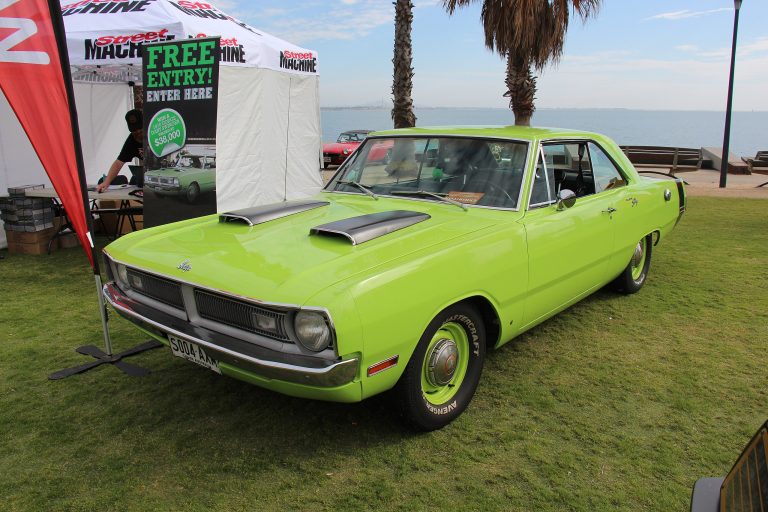
From 1960–1976, the Dodge Dart was a fantastic sports car and muscle car that could hang with the best of them. Dodge originally introduced the Dart as a full-size sedan in 1960, before making it a compact from 1963-on. From the beginning, Dodge stuffed the biggest engines they could inside the Dart, including the early…
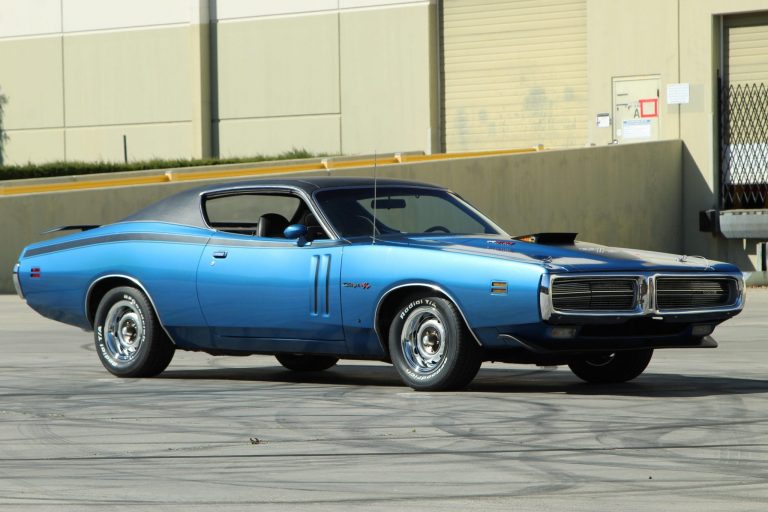
Dodge Charger History1966-1974 The Dodge Charger was a response to the fastback fad started by the Mustang and the Barracuda, but on a much larger scale. Based on the midsize Dodge Coronet model, the Charger was launched in 1966 and quickly became a sales hit with its dramatic fuselage styling of 1968. From the beginning,…
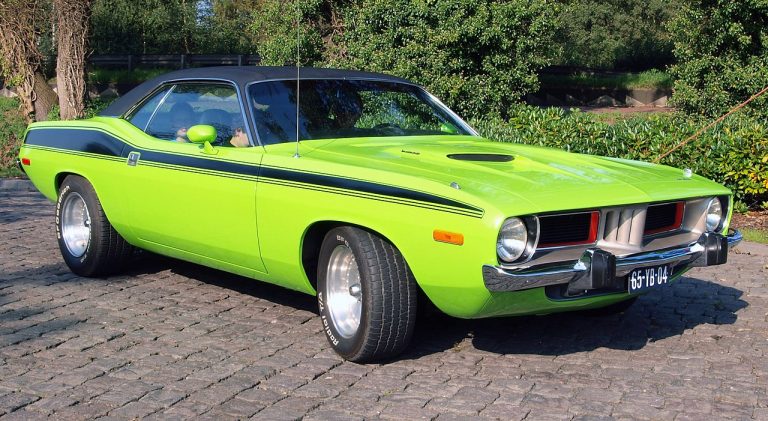
Looking back today, the Plymouth Barracuda was one of the ultimate pony cars of the 1960s and 1970s. While the first generation was relatively forgettable, the second and third generations got the Chrysler big-block V8s, and they could seriously turn heads. The 426 HEMI and 440 Super Commando powered Barracudas straddled the line of pony…
Riviera History 1963-1975 Introduction: The Buick Riviera was not a muscle car, per se, but it had a tremendous impact on the American automotive scene. The Riviera represented one of the most successful American attempts at capturing European styling and performance in a large automobile. Positioned at the top of Buick’s coupe line up, the…
Super Bee History1968-1971 Introduction: During the late 1960s, it is no secret that MOPAR was under a lot of pressure from the competition. Cars like the 1968 Chevrolet Camaro Z/28 and Pontiac GTO were tearing up the strip. While their full-size muscle cars, like the Plymouth GTX, were selling well, they wanted to target a…
When the Oldsmobile Toronado was released in 1966, it represented a dramatic push toward new and innovative ideas for one of America’s oldest brands. By the 1990s, the Toronado was still kicking, but its ethos had shifted so enormously that it came to represent a failing brand whose heyday lay firmly in the past. With…


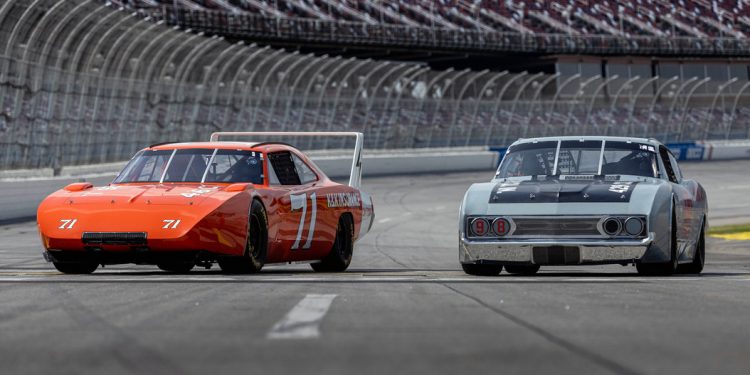 Overall, the design team at Dodge was successful in building a car that would destroy the competition in NASCAR. The 1969 Dodge Daytona would go on to win its inaugural race at the Talledega 500. It would go on to win five more races between the 1969 and 1970 NASCAR season. The Dodge Daytona set multiple records on track, including the first car to hit 200 mph at the hands of Buddy Baker, and multiple off-track land speed records as well.
The Dodge Daytona’s success led the way for other manufacturers to enter their own wing cars into the mix. Sharing the Chrysler B-body platform with the Dodge Charger Daytona, Plymouth released the Superbird for the 1970 NASCAR season. The Plymouth Superbird was even more successful during the 1970 season, winning 8 races.
Overall, the design team at Dodge was successful in building a car that would destroy the competition in NASCAR. The 1969 Dodge Daytona would go on to win its inaugural race at the Talledega 500. It would go on to win five more races between the 1969 and 1970 NASCAR season. The Dodge Daytona set multiple records on track, including the first car to hit 200 mph at the hands of Buddy Baker, and multiple off-track land speed records as well.
The Dodge Daytona’s success led the way for other manufacturers to enter their own wing cars into the mix. Sharing the Chrysler B-body platform with the Dodge Charger Daytona, Plymouth released the Superbird for the 1970 NASCAR season. The Plymouth Superbird was even more successful during the 1970 season, winning 8 races.
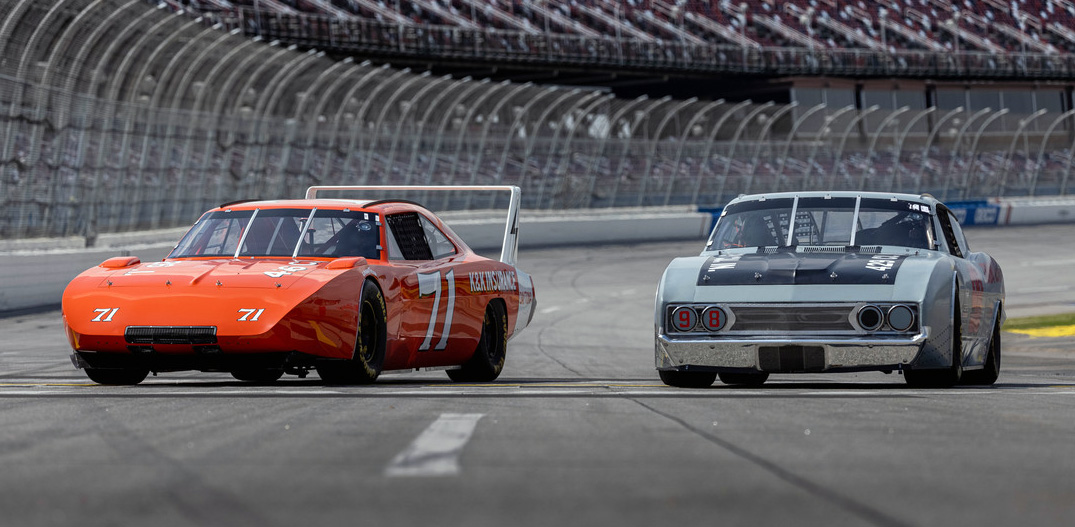 Overall, the design team at Dodge was successful in building a car that would destroy the competition in NASCAR. The 1969 Dodge Daytona would go on to win its inaugural race at the Talledega 500. It would go on to win five more races between the 1969 and 1970 NASCAR season. The Dodge Daytona set multiple records on track, including the first car to hit 200 mph at the hands of Buddy Baker, and multiple off-track land speed records as well.
The Dodge Daytona’s success led the way for other manufacturers to enter their own wing cars into the mix. Sharing the Chrysler B-body platform with the Dodge Charger Daytona, Plymouth released the Superbird for the 1970 NASCAR season. The Plymouth Superbird was even more successful during the 1970 season, winning 8 races.
Overall, the design team at Dodge was successful in building a car that would destroy the competition in NASCAR. The 1969 Dodge Daytona would go on to win its inaugural race at the Talledega 500. It would go on to win five more races between the 1969 and 1970 NASCAR season. The Dodge Daytona set multiple records on track, including the first car to hit 200 mph at the hands of Buddy Baker, and multiple off-track land speed records as well.
The Dodge Daytona’s success led the way for other manufacturers to enter their own wing cars into the mix. Sharing the Chrysler B-body platform with the Dodge Charger Daytona, Plymouth released the Superbird for the 1970 NASCAR season. The Plymouth Superbird was even more successful during the 1970 season, winning 8 races.