Ford Mustang

Meet Chandler
Chandler has a bachelors and masters degree in history as well as a passion for classics and muscle cars. His education and historical knowledge makes him skilled at crafting highly detailed articles about America’s muscle cars and automotive history. His love of muscle cars is undeniable, with him seeking them out at every opportunity during his visits to auto shows and car meets. Chandler’s knowledge and enthusiasm towards automotive history make him a great asset to the Muscle Car Club community.
For nearly 60 years, the Ford Mustang has staked its claim as America’s favorite pony car. Ford first introduced the Mustang in 1964, as a sporty new two-door coupe meant to attract the youth, and it has stayed immensely popular ever since. From the beginning, Ford made performance a priority in the Mustang, which is a legacy that has continued through today – even if it disappeared for a time in the 1970s–1980s.
The engines might be smaller now, but the horsepower is even more gargantuan. Every year, the Mustang remains one of the best selling cars on the market, and the countless special editions and Shelby and Boss variants from the 1960s–1970 are some of the hottest items on the collectors market.
Ford introduced the Mustang in 1964, and it has since spanned a total of seven generations. Due to the Mustang’s incredible history, we’re splitting it up into two articles. This article will cover the first three generations and 30 years of the Ford Mustang, from 1964–1993. When you’re done, make sure to check out our other article on the 1994–2024 Ford Mustang, too.
Ford Mustang, 1964–1993: Overview
The first three generations of the Ford Mustang lasted from 1964–1993, and they firmly established the Mustang as America’s go-to pony car. The Mustangs were immediately popular, selling more than 1.2 million units in the first three years alone. Aided by powerful V8 engines, the Mustang delivered excellent performance in an economical package. Lee Iacocca designed the Mustang in the early 1960s to appeal to the baby boomer generation that was soon to be getting their driver’s licenses and purchasing cars.
The Mustang helped popularize and define the pony car, which is essentially a compact muscle car. Pony cars made their bones by being more affordable while still delivering sporty performance, and having the iconic long-hood, short-decklid style.
The first generation of the Mustang lasted from 1964–1973. Starting with smaller 260 and 289-cid V8 engines in the beginning, in the early-1970s the Mustang would reach peak performance when powered by big-block 428 and 429-cid V8 engines. Unfortunately, the malaise of the 1970s emissions-era washed over the Mustang like an odorous cloud, stifling performance for much of the decade.
The second generation of the Ford Mustang was short and lasted only from 1974–1978. During this era, the Mustang was still hampered by emissions regulations, but visually Ford engineers continued to improve and refine the pony car. The Mustang still retained high sales figures, but it was nowhere near the sporty performance machine it once was.
The third generation Ford Mustang lasted from 1979–1993, and saw the Mustang undergo some considerable changes. Not only did the Mustang continue to evolve through the 1980s and early ‘90s visually, including the beloved Fox Body, but mechanically it received several upgrades. This included turbochargers and electronic fuel injection, which would set the stage for the Mustang’s return to performance in the mid-1990s.
First Generation 1964-1973 Ford Mustang
The Birth of the Mustang
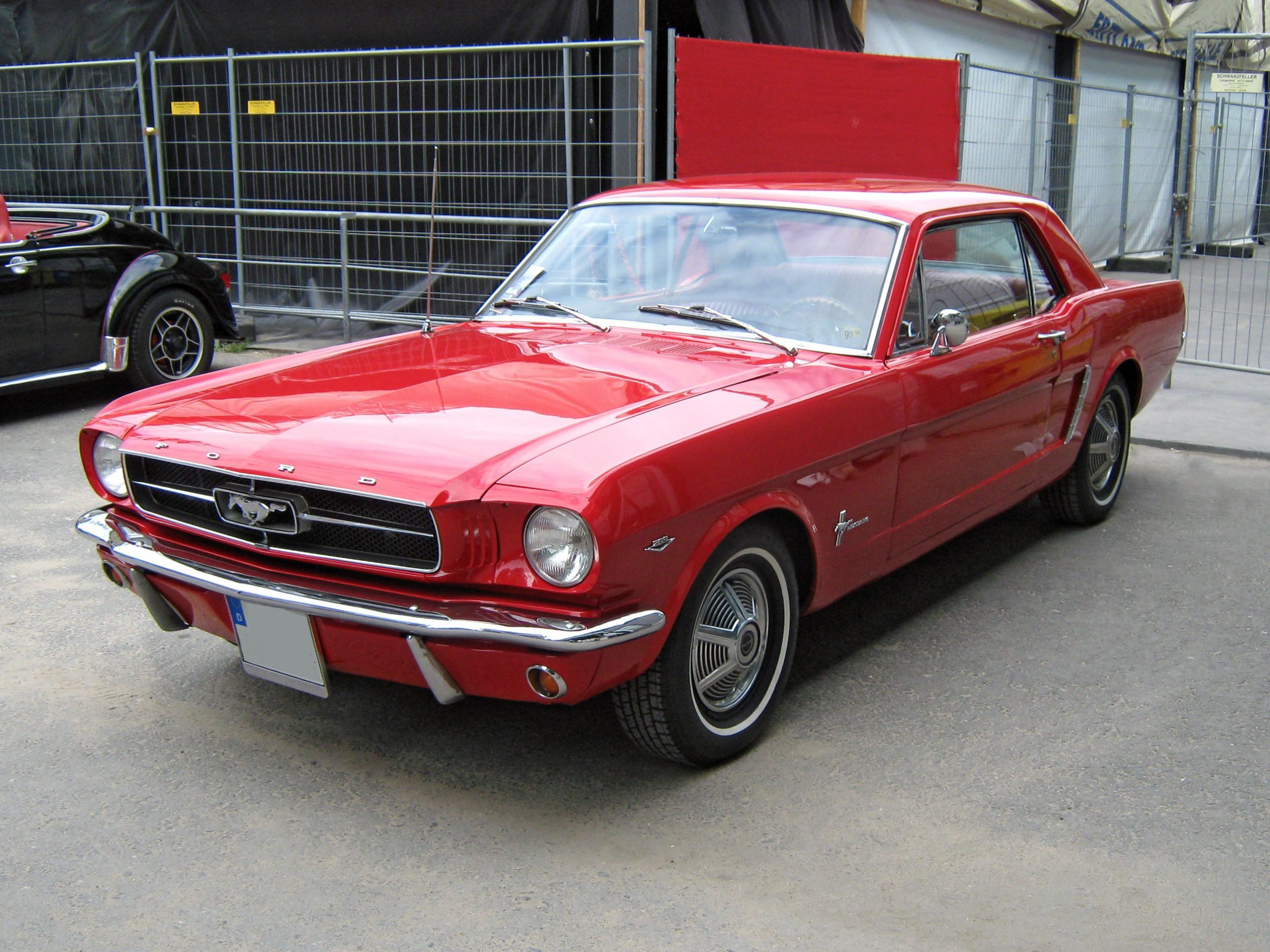
The first generation of the Ford Mustang lasted from 1964–1973. Ford executives unveiled the Mustang on April 17, 1964, after several years of development. Famed Ford executive Lee Iacocca was the visionary behind the car, and he realized that the car market would soon be dominated by baby boomers coming of driving age and looking for the hottest new vehicle. After selling the full-size Ford Thunderbird to their parents, Iacocca created the smaller and sportier Mustang specifically to appeal to the younger generation.
The Mustang was not the first true pony car on the market, as the Plymouth Barracuda beat it by just over two weeks, but the Mustang was considerably more popular. While the Barracuda had respectable sales that peaked at 64,500 in 1965, that year Ford plants were cranking out more than half-a-million units of the Mustang. The Mustang’s true competition on the pony car market turned out to be the Chevrolet Camaro, which did not hit the market until 1967, giving the Mustang a serious head start.
The first Mustangs made their way home to buyers in late 1964. Technically, Ford marketed the first Mustangs as 1965 models and gave them 1965 VINs, but since they were released in late-1964 and manufactured with other 1964 Fords, enthusiasts consider the first generation to be the 1964.5 model year.
The press immediately lauded the Mustang upon its release, with Car Life claiming it could serve as everything from a full fledged race car, to an economy model, to even a rally car. Thousands of people wrote letters to Ford praising the new car, and it sold more than 121,000 units in its first year alone.
The Mustang Rides
Ford engineers modeled the Mustang off of the existing Ford Falcon and Ford Fairlane, and it was considered a compact car. Ford used the inaugural Mustang as the 1964 Indy 500 Pace Car, though that version was not made available to the public. What was available to the public was a two-door coupe or convertible, and in the 1965 Ford Mustang they introduced a 2+2 fastback model.
Also in 1965, Ford introduced the GT package for the Mustang, which improved power, handling, and braking, and included aero and visual upgrades. Something that really attracted buyers to the Mustang was the endless amount of customization through options. There were several different engines, transmissions, packages, colors, and accessories available, allowing buyers to make their Mustang truly unique and their own.
For 1967, Ford significantly restyled the Mustang, making everything bigger – including the engines. Ford also improved the interior, making it more tasteful and luxurious in some models. The 1968 Ford Mustang became even more popular in the mainstream after its appearance in the film “Bullitt,” starring Steve McQueen and featuring the Mustang fastback face off against a Dodge Charger.
Again for the 1969 Mustang, Ford gave the car a further redesign, making it bigger and heavier, but also lowering the top to give it the now iconic look. The fastback was redesigned as the sportsroof, and got a new sloped roofline. They also debuted the 1969 Ford Mustang Mach 1, which had a shaker hood scoop and other visual and aero pieces that made it look incredibly mean. That year, Ford also brought two other high performance variants, the Boss 302 and Boss 429 Mustangs. The production Boss 429 was created for NASCAR homologation, and both the 302/429 only lasted until 1970.
The Early-’70s Mustang
For 1970, Ford dropped the GT performance package from the lineup. In 1971 and 1972, Ford again made the Mustang even bigger, with much of the influence coming from Semon “Bunkie” Knudsen, who had been fighting for a larger body for years against Mustang progenitor Lee Iacocca. 1971 also saw the Boss 351, the last of the Boss Mustangs of the 70s. The Mustang changed little from 1971–1973, with the exception of the engine option.
When the first generation Mustang ended in 1973, it had been through a whirlwind of changes. From a sporty and sleek sports car in 1964, the Mustang was now bigger and fatter, almost entering muscle car territory in some respects. Sales began to decline in the 1970s, partly due to the rumors that a new Mustang was to come out in 1974, and many wanted to wait. Another was the drop in performance starting in 1972, a symptom of increasing emissions regulations, which made the Mustang much less sporty.
The Shelby Mustangs
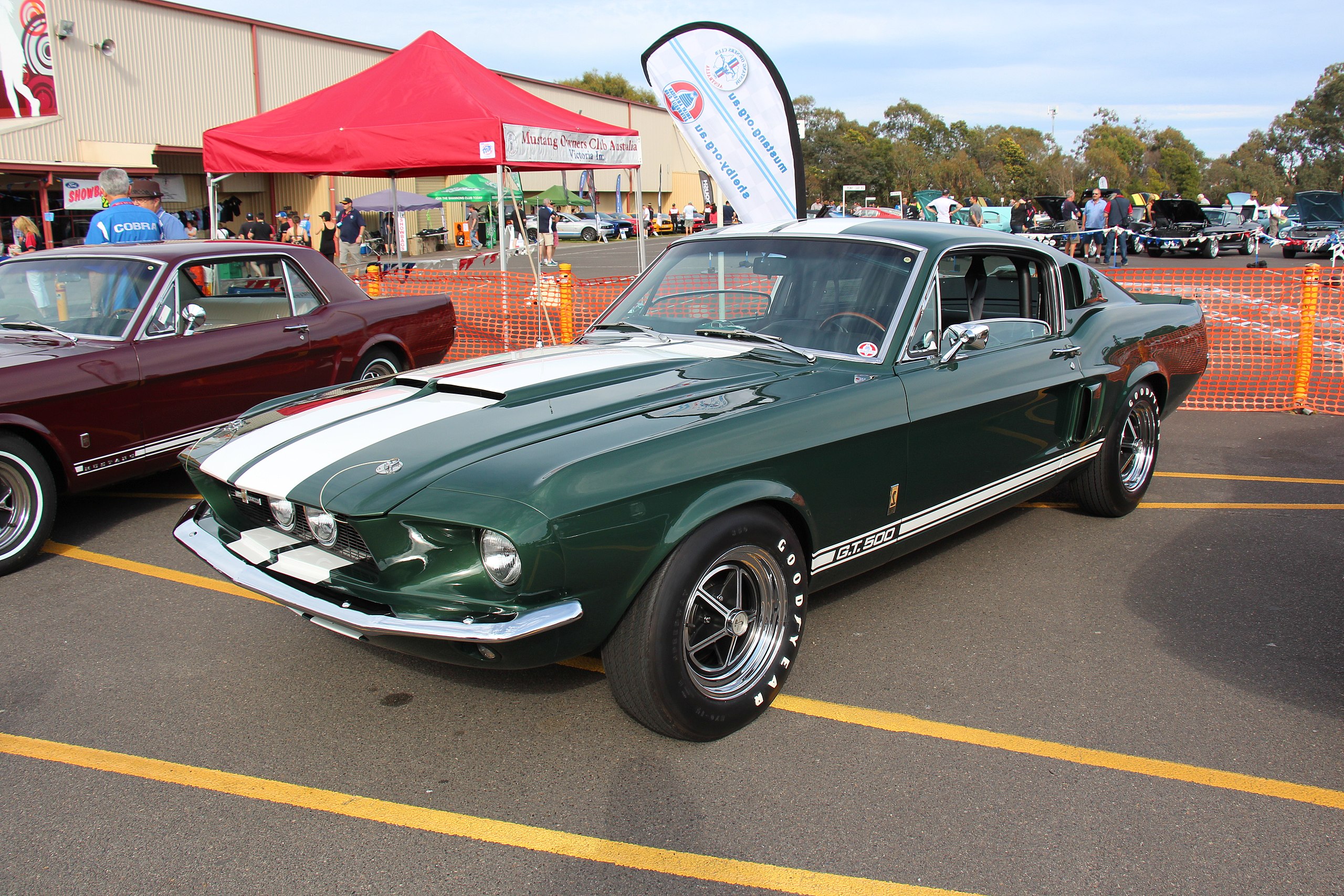
While the Ford Mustang would eventually grow into a high performance pony car, it did not quite have that reputation in 1964. Ford sold it as a sports car and it had decent performance, but it did not stand a candle towards real machines like the Chevrolet Corvette. Enter: Carroll Shelby.
Shelby had been racing cars since his late-20s, and opened Shelby American in 1962. At Shelby American, Shelby put himself on the map with the AC Cobra. The AC and SC Cobras were two-seater roadsters that used Ford V8 engines with shells from British manufacturer AC Cars, and they were instant classics.
Shelby’s first foray into Mustangs was the 1965 Mustang GT350, which was based on the 2+2 fastback model. It was a high performance Mustang, and had improved handling, braking, and a more powerful version of the 289 V8 engine. There was also the GT350R, which were specifically built for drag racing and less than 10 were made the first year. They were barren of all unnecessary weight, like insulation, upholstery, or even a gas tank.
The GT350 continued for 1966, and Ford also introduced the GT350H, which were standard GT350s but made for the Hertz Rent-A-Car company. Customers on vacation no longer had to sacrifice their GT350 when they went on vacation, and it also gave other enthusiasts a chance to try them out without forking out the cash to buy one.
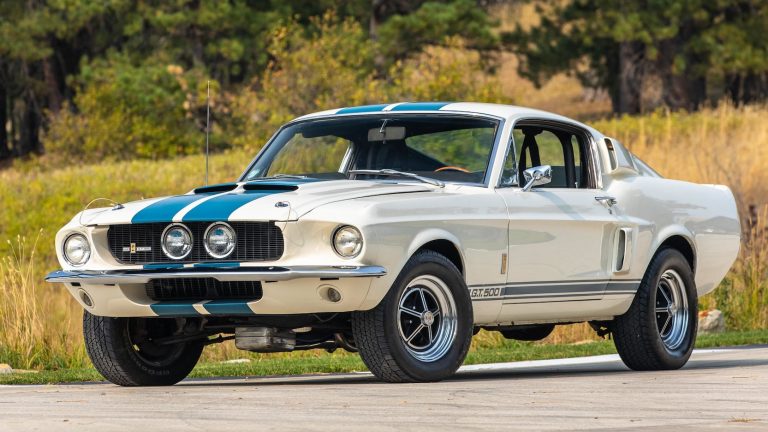
In 1967, Shelby beefed up the GT350 and sold the GT500 right alongside it. The 1967 Mustang GT500 used a bigger 428 cid V8 engine, and outperformed the GT350 in every respect. There was also the one-off 1967 Mustang GT500 Super Snake, which used a smaller 427 cid V8 that made more than 500 horsepower.
The Shelby Mustangs Continue
For 1968, Ford took over production of the Shelby Mustangs, and Carroll Shelby himself largely took a backseat as Ford took the reins in design and production. Both the GT350 and GT500 got even larger 302 and 428 engines, and they were available as a convertible for the first time. In addition, Ford also started calling them the Cobra GT350 and Cobra GT500. Ford also created the one-year GT500KR, which stood for “King of the Road,” and had the 428 Cobra Jet V8 engine.
The original run of Shelby Mustangs ended after the 1969 model year, though some leftover models were sold in 1970. There were however a limited number of “Shelby Europa” Mustangs that sold for 1971, but production stateside was over in the ‘60s. The Shelby moniker would not return until the 2000s with the fifth generation S197 Mustangs.
1964-1970 Mustang Engine Technical Specifications
| Model Years | Engine | Horsepower | Torque |
| 1964 | 170 cid I6 (1bbl) | 105 horsepower | 156 lb-ft |
| 1964 | 260 cid V8 (2bbl) | 164 horsepower | 258 lb-ft |
| 1964 | 289 cid V8 (4bbl) | 210 horsepower | 300 lb-ft |
| 1964-1967 | 289 cid V8 (4bbl) | 271 horsepower | 312 lb-ft |
| 1965-1967 | 200 cid I6 (1bbl) | 120 horsepower | 190 lb-ft |
| 1965-1967 | 289 cid V8 (2bbl) | 200 horsepower | 282 lb-ft |
| 1965-1967 | 289 cid V8 (4bbl) | 225 horsepower | 305 lb-ft |
| 1965-1967 | 289 cid V8 (4bbl) (GT350/H) | 306 horsepower | 329 lb-ft |
| 1965 | 289 cid V8 (4bbl) (GT350R) | 350 horsepower | 350 lb-ft |
| 1965 | 427 cid V8 (2x4bbl) (A/FX) | 616 horsepower | 515 lb-ft |
| 1967 | 390 cid V8 (4bbl) | 320 horsepower | 427 lb-ft |
| 1967 | 428 cid V8 (2x4bbl) (GT500) | 355 horsepower | 420 lb-ft |
| 1967 | 427 cid V8 (4bbl) (GT500 SS) | 520 horsepower | 500 lb-ft |
| 1968-1969 | 200 cid I6 (1bbl) | 115 horsepower | 190 lb-ft |
| 1968 | 289 cid V8 (2bbl) | 195 horsepower | 288 lb-ft |
| 1968 | 302 cid V8 (2bbl) | 210 horsepower | 300 lb-ft |
| 1968 | 302 cid V8 (4bbl) | 230 horsepower | 310 lb-ft |
| 1968 | 302 cid V8 (4bbl) (GT350) | 250 horsepower | 310 lb-ft |
| 1968 | 390 cid V8 (2bbl) | 280 horsepower | 401 lb-ft |
| 1968 | 390 cid V8 (4bbl) | 325 horsepower | 427 lb-ft |
| 1968-1970 | 428 cid V8 (4bbl) (Cobra Jet) | 335 horsepower | 440 lb-ft |
| 1968-1969 | 428 cid V8 (4bbl) (GT500) | 360 horsepower | 420 lb-ft |
| 1969-1970 | 250 cid I6 (1bbl) | 155 horsepower | 240 lb-ft |
| 1969-1970 | 302 cid V8 (2bbl) | 220 horsepower | 300 lb-ft |
| 1969 | 351 cid V8 (2bbl) (Windsor) | 250 horsepower | 355 lb-ft |
| 1969-1970 | 302 cid V8 (4bbl) (Boss) | 290 horsepower | 290 lb-ft |
| 1969 | 351 cid V8 (4bbl) (GT350) | 290 horsepower | 385 lb-ft |
| 1969 | 390 cid V8 (4bbl) | 320 horsepower | 427 lb-ft |
| 1969-1970 | 429 cid V8 (Boss) | 375 horsepower | 450 lb-ft |
1970-1973 Mustang Engine Technical Specifications
| Model Years | Engine | Horsepower | Torque |
| 1970 | 200 cid I6 (1bbl) | 120 horsepower | 190 lb-ft |
| 1970 | 351 cid V8 (2bbl) (Cleveland) | 250 horsepower | 355 lb-ft |
| 1970 | 351 cid V8 (4bbl) (Cleveland) | 300 horsepower | 385 lb-ft |
| 1971 | 250 cid I6 (1bbl) | 145 horsepower | 232 lb-ft |
| 1971 | 302 cid V8 (2bbl) | 210 horsepower | 296 lb-ft |
| 1971 | 351 cid V8 (2bbl) | 240 horsepower | 350 lb-ft |
| 1971 | 351 cid V8 (4bbl) (Cobra Jet) | 280 horsepower | 370 lb-ft |
| 1971 | 351 cid V8 (4bbl) | 285 horsepower | 370 lb-ft |
| 1971 | 351 cid V8 (4bbl) | 330 horsepower | 370 lb-ft |
| 1971 | 429 cid V8 (4bbl) (Super Cobra Jet) | 370 horsepower | 450 lb-ft |
| 1972-1973 | 250 cid I6 (1bbl) | 99 horsepower | 197 lb-ft |
| 1972-1973 | 302 cid V8 (2bbl) | 141 horsepower | 239 lb-ft |
| 1972-1973 | 351 cid V8 (2bbl) | 177 horsepower | 284 lb-ft |
| 1972-1973 | 351 cid V8 (4bbl) (Cobra Jet) | 266 horsepower | 301 lb-ft |
| 1972 | 351 cid V8 (4bbl) | 275 horsepower | 286 lb-ft |
First Generation Engines and Performance
As far as first generation engines are concerned, the Mustang had an embarrassment of riches. For the 1964.5 Mustang, buyers could get either an I6 or two V8s. The most powerful V8 was the 289 cid, which made 210 horsepower standard or 271 horsepower with the K-Code option. The K-Code had a stronger block, beefier internals, higher 10.5:1 compression ratio, a 600-cfm Autolite quad-barrel carburetor, and solid-lifter camshaft.
Also for 1965 was the A/FX Mustang, which featured the legendary 427 cid V8 SOHC “Cammer” engine, making an astonishing 616 horsepower and 515 lb-ft of torque. These were not production Mustangs, but were built by Holman-Moody from North Carolina to compete in the NHRA’s new “Factory Experimental” (FX) class. Some engines initially had the 427 “high-riser” V8 due to production issues, but most were later retrofitted with “Cammers.” In all, only 15 A/FX Mustangs were ever built.
In 1967, Ford made the 390 V8 from the Thunderbird available in the Mustang, producing 320 horsepower (325 horsepower in 1968), in response to the Chevrolet Camaro SS396. Ford also made two and four-barrel carbureted versions of the 302 cid V8 available, but that wasn’t the real news. The real excitement came from the new 428 cid “Cobra Jet” V8, which made 335 horsepower through a 735-cfm Holley quad-barrel carburetor.
Ford created the Cobra Jet to compete with the big-block V8s from GM and Chrysler, and Ford dealer Bob Tasca was instrumental in their creation. The Cobra Jet used a 428 block, 427 low-riser heads, a cast-iron Police Interceptor intake manifold, the 390 V8 camshaft, and low-restriction dual exhausts. In 1969, Ford made the 351 Windsor V8 available with either 250 horsepower or 290 horsepower, the latter of which they also used in the 1969 GT350.
The 1970s Engines
For the 1970 Mustang, Ford kept most of the same engines, but replaced the 351 Windsor with the 351 Cleveland making 300 horsepower, though both were sold together for a time. In 1971, Ford switched up the Cobra Jet for the first time since 1968. One of them was the 351 Cobra Jet, which used the Cleveland block and made 280 horsepower.
But the real news was the 429 Cobra Jet, making 370 horsepower with an optional Ram Air package. With the Drag Pack option, the 429 turned into the Super Cobra Jet, which had new internals, a larger 780-cfm Holley quad-barrel carb, and a new cast-iron intake manifold. The 429 SCJ/CJ only lasted one year, as emissions regulations made it unavailable for 1972-on.
The 351 Cobra jet lasted through 1973, though power dropped to 266 horsepower in 1972. That was still enough to make the 351 Cobra Jet the top option for 1973, as the Mustang had fallen a long way in just a few years.
In 1972, Ford also switched from SAE Gross to SAE Net horsepower ratings. This meant the engine had to be measured while taking into account drivetrain loss, which produced lower marketing numbers.
However, most of the decline in performance was due to emissions regulations restrictions. They made most manufacturers ditch the 400+ cid big-block V8s for smaller, more economical engines. It was also a reflection of buying trends among American consumers, who were buying less V8s and more I4s and V6s with better gas mileage. The oil crisis of 1973 did not help, and confirmed for many Americans the utility of smaller more fuel efficient engines.
The Shelby Engines
The first Shelby Mustang was the GT350 and used the high output “K-Code” 289 cid V8 from 1965–1967. However, Shelby modified the V8 to produce 306 horsepower, a jump of 35 horsepower from the standard K-Code. Part of this was due to the larger 715-cfm Holley quad-barrel carburetor, aluminum intake, new headers and mufflers, and exhaust cutouts.
In 1967, Shelby introduced the first Mustang GT500, which used a 335 horsepower version of the 428 cid V8 Cobra Jet engine. Instead of a single carb, the Cobra Jet used dual 600-cfm Holley quad-barrel carbs to make its gaudy power numbers. That year, they also produced the one-year-only GT500 Super Snake, which used the mid-riser version of the 427 cid V8, making 520 horsepower.
For 1968, Shelby upgraded the GT350 and GT500 engines. The GT350 now used a 302 cid V8 making 250 horsepower, which was a step down from the previous 271 horsepower. The GT500 used a version of the 428 V8 “Police Interceptor” engine, which made 360 horsepower. Shelby kept the 428 Cobra Jet, but now put it inside the GT500KR and gave it a single 735-cfm Holley quad-barrel, but it still kept its 335 horsepower rating.
For 1969, Shelby dropped the GT500KR and put the 428 Cobra Jet back in the standard GT500. They also ditched the 302 V8 and instead put in the Windsor 351 V8 making 290 horsepower through a 470-cfm Autolite quad-barrel.
The Boss Engines
In addition to the Shelby Mustangs, Ford also created another high performance variant from 1969–1971, the Boss Mustangs. From 1969–1970, there was the Boss 302 and Boss 429, which used 302 and 429 V8 engines. For 1971, there was the Boss 351, which used a 351 Cleveland V8.
Ford created the Boss Mustangs to run at NASCAR, and they included high performance engines and significant suspension upgrades. For the Boss 302, a 290 horsepower version of the 302 V8 was used with 351 Cleveland V8 cylinder heads. The carburetor was a huge 780-cfm Holley quad-barrel.
In the Boss 429, the 429 big-block V8 was the power plant – the Cobra Jet engine – and it used aluminum cylinder heads for the best flow. The carburetor was a 735-cfm Holley quad-barrel. Both the 302 and 429 Boss Mustangs only lasted for two years, and were gone by 1971. That year, Ford instead used the 351 Boss, which had a high-output 351 Cleveland V8 engine. The engine produced 330 horsepower with a 750-cfm Autolite quad-barrel.
First Generation Ford Mustang Production Numbers
| Model Year | Bodystyle | Production Total |
| 1964.5 | Mustang | 121,538 |
| 1965 | Mustang | 559,451 |
| 1966 | Mustang | 582,051 |
| Mustang GT | 25,517 | |
| 1966 Total | 607,568 | |
| 1967 | Mustang | 448,034 |
| Mustang GT | 24,087 | |
| 1967 Total | 472,121 | |
| 1968 | Mustang | 299,690 |
| Mustang GT | 17,458 | |
| 1968 Total | 317,148 | |
| 1969 | Mustang | 294,428 |
| Mustang GT | 5,396 | |
| 1969 Total | 299,824 | |
| 1970 | Mustang | 135,711 |
| Grande Coupe | 13,591 | |
| Mach 1 | 40,970 | |
| 1970 Total | 190,272 | |
| 1971 | Mustang | 93,968 |
| Grande Coupe | 17,406 | |
| Mach 1 | 36,498 | |
| Boss 351 | 1,806 | |
| 1971 Total | 149,678 | |
| 1972 | Mustang | 79,013 |
| Grande Coupe | 18,405 | |
| Mach 1 | 27,675 | |
| 1972 Total | 125,093 | |
| 1973 | Mustang | 74,104 |
| Grande Coupe | 25,274 | |
| Mach 1 | 35,439 | |
| 1973 Total | 134,817 |
Second Generation Ford Mustang
The second generation of the Ford Mustang was short lived, and only lasted for five model years from 1974–1978. After Ford buyers started deserting the Mustang in the 1970s, Iacocca and his team knew they had some major revisions to do. What had started off as a compact performance sports car in the mid-1960s, was swollen and had become severely bloated by 1973.
Now, due to emissions, Ford engineers weren’t even allowed the massive big-block engines that made them make the Mustang bigger, so the only direction to go was down. For the first time since it came out, the Ford Mustang got smaller, skinnier, and lighter in 1974. Officially branded as the Mustang II, it won Motor Trend’s Car of the Year award in its first year. Production once again picked up for 1974, though it was not as strong for the next few years.
For 1974, Ford gave the Mustang new body styles, which were a two-door notchback coupe or a three-door hatchback. The convertible was eliminated. Four models were available, the base coupe or Ghia coupe, and the base hatchback or Mach 1 hatchback. The Ghia was the upscale option, and had a vinyl roof, shag carpeting, remote mirrors, and other luxury goodies. The Mach 1 continued as a performance package, and could be had with the Rallye package that had even more handling upgrades.
In 1976, the Cobra II package arrived, which was a visual package that included a fake hood scoop, window louvers on the rear quarters, and a coiled-snake badge. In 1977, the Mustang could be had with a T-Top on the hatchbacks.
The Mustang Goes Disco
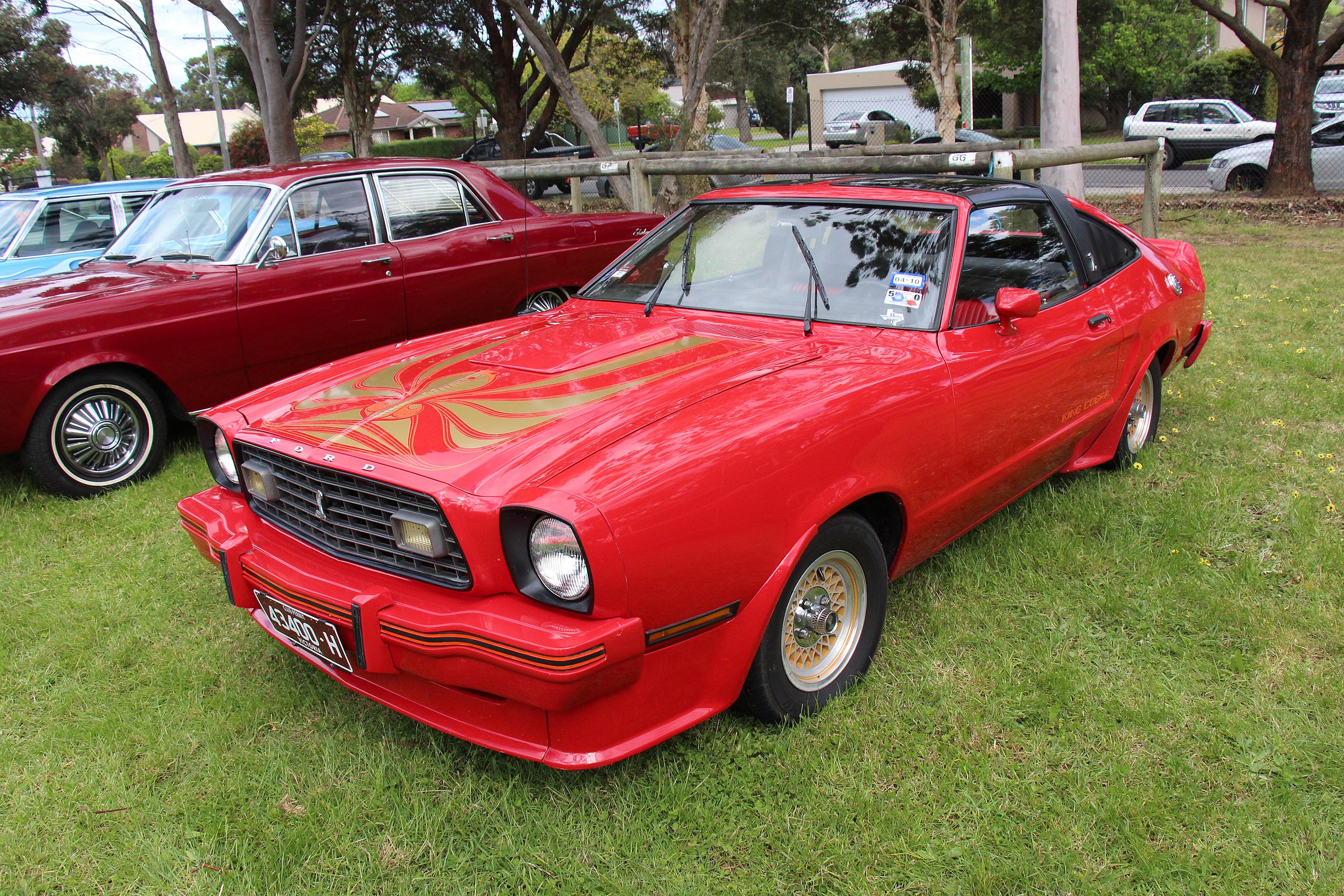
As with everything else in the era, in the late-1970s disco came for the Mustang, in the form of the 1978 Mustang King Cobra. It wasn’t fast, but it looked like it should have been, and was equipped with a huge hood scoop, rear spoiler, and massive King Cobra logo on the hood. The only engine was a 139 horsepower 302 V8 with a four-speed manual, and less than 5,000 units sold.
Unfortunately, the Mustang II never received any iconic Shelby or Boss variants, and performance was completely pitiful. The redesign was a hit with buyers visually, and many of them were glad to be saving money at the pumps with the gas crisis of 1973.
1974-1978 Mustang Engine Technical Specifications
| Model Years | Engine | Horsepower | Torque |
| 1974-1975 | 2.3L I4 (2bbl) | 88 horsepower | 116 lb-ft |
| 1974-1978 | 2.8L V6 (2bbl) | 105 horsepower | 140 lb-ft |
| 1975 | 5.0L V8 (2bbl) | 122 horsepower | 230 lb-ft |
| 1976-1978 | 2.3L I4 (2bbl) | 92 horsepower | 120 lb-ft |
| 1976-1978 | 5.0L V8 (2bbl) | 139 horsepower | 250 lb-ft |
| 1977-1978 | 2.3L I4 (2bbl) | 89 horsepower | 115 lb-ft |
| 1977 | 2.8L V6 (2bbl) | 93 horsepower | 130 lb-ft |
| 1978 | 2.8L V6 (2bbl) | 90 horsepower | 130 lb-ft |
Second Generation Engines, Transmission Options, and Performance
From start to finish, the engines of the second generation Mustang II were uninspiring. For the first time, Ford gave the Mustang an inline-four engine, which could not even crack 100 horsepower. Other engines were a 2.8L V6 and from 1975-on a 5.0L V8, which topped out at 139 horsepower – the most powerful Mustang II ever built.
Still, the Mustang II managed to sell pretty well, as it reflected the growing change in consumers preferences. While Ford probably could have done very well selling a big-block that still topped 300 horsepower, emissions made that only a pipe dream in that day and age. The big-block V8s were already gone by 1973, as Ford could not figure out how to make them emissions compliant.
With performance gone in the Mustang, buyers figured why shell out extra cash for a big engine that was only going to cost more at the pump without throwing your hair back. The smaller I4 and V6 engines had much better fuel economy, weighed less, and made about the same performance-wise.
Second Generation Ford Mustang Production Numbers
| Model Year | Bodystyle | Production Total |
| 1974 | Mustang | 252,470 |
| Ghia Coupe | 89,477 | |
| Mach 1 | 44,046 | |
| 1974 Total | 385,993 | |
| 1975 | Mustang | 115,229 |
| Ghia Coupe | 52,320 | |
| Mach 1 | 21,026 | |
| 1975 Total | 188,575 | |
| 1976 | Mustang | 115,561 |
| Ghia Coupe | 37,515 | |
| Mach 1 | 9,232 | |
| Cobra II | 25,259 | |
| 1976 Total | 187,567 | |
| 1977 | Mustang | 104,996 |
| Ghia Coupe | 29,510 | |
| Mach 1 | 6,719 | |
| Cobra II | 11,948 | |
| 1977 Total | 153,173 | |
| 1978 | Mustang | 141,703 |
| Ghia Coupe | 34,730 | |
| Mach 1 | 7,968 | |
| Cobra II | 8,009 | |
| 1978 Total | 192,410 |
Third Generation Ford Mustang
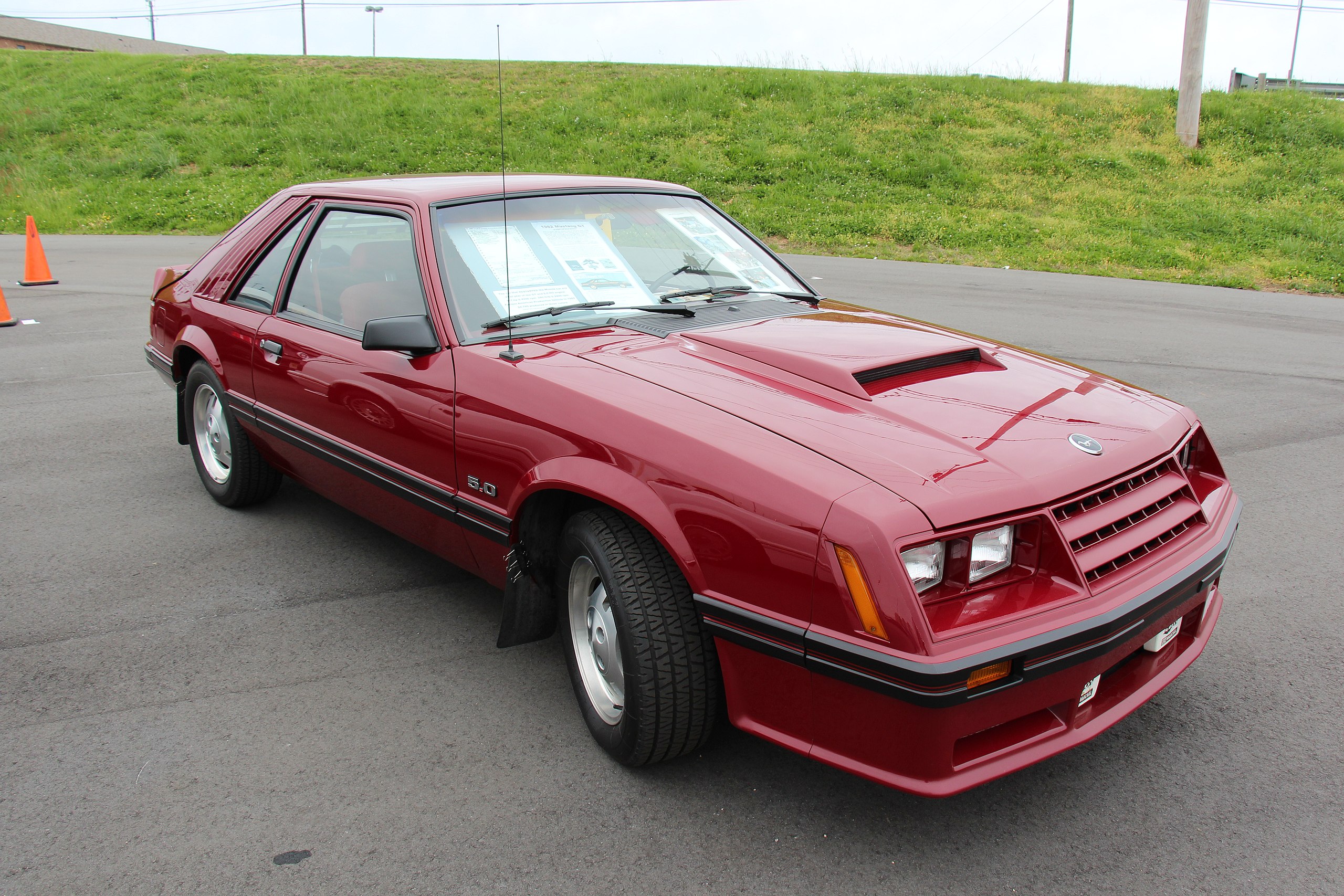
The third generation of the Ford Mustang lasted from 1979–1993, and saw the continuation of the less powerful pony car. Back to being called the Mustang again (the II was dropped), Ford now put the car on the all-new Fox Body platform. The Fox Platform was a significant redesign, and the 1979 model was longer and taller than the year prior.
It featured MacPherson strut suspension in the front, live rear axle suspension in the rear, and was of unibody construction. The hood was slanted back and had quad, square headlights, and the rear roofline and side panels lost their slope curves.
As part of the introduction of the new Mustang, Ford executives got it chosen as the 1979 Indy 500 Pace Car. They produced just over 10,000 replicas of the car, which featured either a turbo 2.3L four-cylinder or a 5.0L V8 engine. The Cobra package continued through 1981, but was dropped after.
In 1982, Ford reintroduced the Mustang GT, this time as a standalone model instead of an optional package. It had a high-output 5.0L (302 cid) V8 engine and improved suspension and handling. Other models included the L, GL, and GLX from 1982–1983, which were changed to the L and LX in 1984. For the 1983 Mustang, Ford revised the front fascia and taillights, and they also brought back the convertible for the first time.
For the 1984 Ford Mustang, there was a 20th Anniversary edition that had throwback styling to the old Shelby GT350s. That year, they also introduced the SVO Mustang produced by Ford’s Special Vehicle Operations team created in 1980. Using a turbocharged 2.3L four-cylinder, the car was the top-of-the-line for Mustang performance.
The New Fox Body
In 1987, Ford significantly updated the Fox Body Mustang’s styling for the first time. The facelift included a revised nose that was more rounded and aero, somewhat of a relaxation of the squared dimensions, wraparound headlights, new rear windows, new bodyskirts, and a completely revised interior. The Mustang largely stayed the same visually until 1993, when the third generation ended.
In 1993, Ford introduced the Mustang SVT Cobra, a product of Ford’s new Special Vehicle Team division. It featured a more powerful V8 engine and unique visual styling. There was also the 1993 Ford Mustang Cobra R, which used the same V8 engine but added even better suspension, handling, and brakes, and dropped “options” like air conditioning and a stereos system.
1979-1993 Mustang Engine Technical Specifications
| Model Years | Engine | Horsepower | Torque |
| 1979-1986 | 2.3L I4 (1bbl) | 88 horsepower | 118 lb-ft |
| 1979-1980 | 2.3L I4 (Turbo) | 132 horsepower | 165 lb-ft |
| 1979 | 2.8L V6 (2bbl) | 109 horsepower | 142 lb-ft |
| 1979 | 3.3L V6 (2bbl) | 85 horsepower | 154 lb-ft |
| 1979 | 5.0L V8 (2bbl) | 140 horsepower | 250 lb-ft |
| 1980 | 3.3L V6 (2bbl) | 91 horsepower | 160 lb-ft |
| 1980 | 4.2L V8 (2bbl) | 119 horsepower | 193 lb-ft |
| 1981 | 3.3L V6 (2bbl) | 94 horsepower | 160 lb-ft |
| 1981 | 4.2L V8 (2bbl) | 115 horsepower | 193 lb-ft |
| 1982 | 3.3L V6 (2bbl) | 87 horsepower | 160 lb-ft |
| 1982 | 4.2L V8 (2bbl) | 120 horsepower | 205 lb-ft |
| 1982 | 5.0L V8 (4bbl) | 157 horsepower | 240 lb-ft |
| 1983 | 2.3L I4 (Turbo) | 132 horsepower | 170 lb-ft |
| 1983 | 3.8L V6 (2bbl) | 105 horsepower | 175 lb-ft |
| 1983-1984 | 5.0L V8 (4bbl) | 175 horsepower | 165 lb-ft |
| 1984 | 2.3L I4 (Turbo) | 145 horsepower | 180 lb-ft |
| 1984 | 2.3L I4 (Turbo) | 175 horsepower | 210 lb-ft |
| 1984-1986 | 3.8L V6 (2bbl) | 120 horsepower | 205 lb-ft |
| 1984-1985 | 5.0L V8 (EFI) | 165 horsepower | 245 lb-ft |
| 1985 | 2.3L I4 (Turbo) | 205 horsepower | 240 lb-ft |
| 1985 | 5.0L V8 (4bbl) | 210 horsepower | 285 lb-ft |
| 1986 | 2.3L I4 (Turbo) | 200 horsepower | 240 lb-ft |
| 1986 | 5.0L V8 (EFI) | 200 horsepower | 285 lb-ft |
| 1987-1990 | 2.3L I4 (EFI) | 90 horsepower | 130 lb-ft |
| 1987-1992 | 5.0L V8 (EFI) | 225 horsepower | 300 lb-ft |
| 1991-1993 | 2.3L I4 (EFI) | 105 horsepower | 135 lb-ft |
| 1993 | 5.0L V8 (EFI) | 205 horsepower | 275 lb-ft |
| 1993 | 5.0L V8 (Cobra) | 235 horsepower | 285 lb-ft |
Third Generation Engines, Transmission Options, and Performance
Similar to the Mustang II, the third generation of the Mustang was not very inspiring for performance. For 1979, Ford used a 2.3L turbocharged I4 for the first time, but it only made 132 horsepower (advertised as 140 horsepower). It was not intercooled, ran only 5 PSI of boost, still used a carburetor, and was prone to blowing up on owners due to poor oil lubrication.
For the 1982 Mustang, Ford reintroduced the 5.0L (302 cid) V8, which had been dropped from 1980–1981. They put the new HO V8 inside the Mustang GT, where it made 157 horsepower. Compared with the standard 5.0, the HO version had a hotter camshaft, stiffened valve train, 356-cfm double-barrel carb, low-restriction air intake, and single exhaust. While it might not sound like a lot now, the engine was praised for its torque delivery and was the fastest Mustang available.
In 1983, Ford ditched the carb on the turbo 2.3 I4 and introduced electronic fuel injection for the first time. It bumped up power to 145 horsepower, and had forged aluminum pistons, special alloy valves, a lightweight flywheel, and an oil cooler. That year, they also made the HO 5.0 V8 more powerful, taking it to 175 horsepower. This jumped to 205 horsepower in 1985 due to new headers, a new camshaft, and modifications to reduce parasitic loss.
The SVO Mustang and EFI for the 5.0
In 1984, Ford’s SVO team got a hold of the 2.3L turbo and made some nice improvements, boosting it up to 175 horsepower – the same as the much larger 5.0 V8. They upgraded the turbocharger to a larger T3 turbo, also made by Garret AiResearch, but it now put out 14 PSI of boost – but only with premium gas, it was limited to 10 PSI on regular. The SVO Mustang also included an air-to-air intercooler, which helped cool the boost.
In 1985, output increased to 205 horsepower due to a better flowing intake, less restrictive exhaust, bigger injectors, and more aggressive camshaft. This dropped to 200 horsepower in 1986, after which Ford dropped the SVO turbo after poor sales.
Also in 1986, Ford brought electronic fuel injection to the 5.0 V8, where it made 200 horsepower. For the 1987 Mustang, Ford bumped up power to 225 horsepower, where it stayed until 1992, when it was re-rated at 205 horsepower. In 1993, Ford brought out a special edition of the HO 5.0, which made 235 horsepower and was reserved solely for the new Cobra R.
By the end of the third generation Mustang, performance was beginning to return for the first time since the early-’70s. Ford finally started to figure out how to make the larger V8s more emissions compliant, largely thanks to electronic fuel injection, and they started making the Mustang desirable, again.
Third Generation Ford Mustang Production Numbers
| Model Year | Bodystyle | Production Total |
| 1979 | Mustang | 369,936 |
| 1980 | Mustang | 271,322 |
| 1981 | Mustang | 182,552 |
| 1982 | Mustang | 130,418 |
| 1983 | Mustang | 120,873 |
| 1984 | Mustang | 141,480 |
| 1985 | Mustang | 156,514 |
| 1986 | Mustang | 224,410 |
| 1987 | Mustang | 159,145 |
| 1988 | Mustang | 221,225 |
| 1989 | Mustang | 209,769 |
| 1990 | Mustang | 128,189 |
| 1991 | Mustang | 98,373 |
| 1992 | Mustang | 79,280 |
| 1993 | Mustang | 114,228 |
Ford Mustang Legacy
The first three generations of the Ford Mustang were instrumental in putting it on the map as America’s favorite pony car. It debuted in 1964 to much fanfare and delight, and only continued to excel and push the envelope through the early 1970s. By then, however, emissions regulations had conspired to weaken horsepower output, and the Mustang had become a bloated shell of its past.
The Mustang II was a nice restyling of the Mustang, but failed to live up to its former reputation as a sporty machine. The third generation Mustang started off slow, but by the mid-1980s things were improving thanks to electronic fuel injection and turbochargers, but it would not be until the fourth generation that performance truly returned.
Make sure to check out our other article on the 1994–2024 Ford Mustang.