Pontiac Catalina 2+2

Meet Chandler
Chandler has a bachelors and masters degree in history as well as a passion for classics and muscle cars. His education and historical knowledge makes him skilled at crafting highly detailed articles about America’s muscle cars and automotive history. His love of muscle cars is undeniable, with him seeking them out at every opportunity during his visits to auto shows and car meets. Chandler’s knowledge and enthusiasm towards automotive history make him a great asset to the Muscle Car Club community.
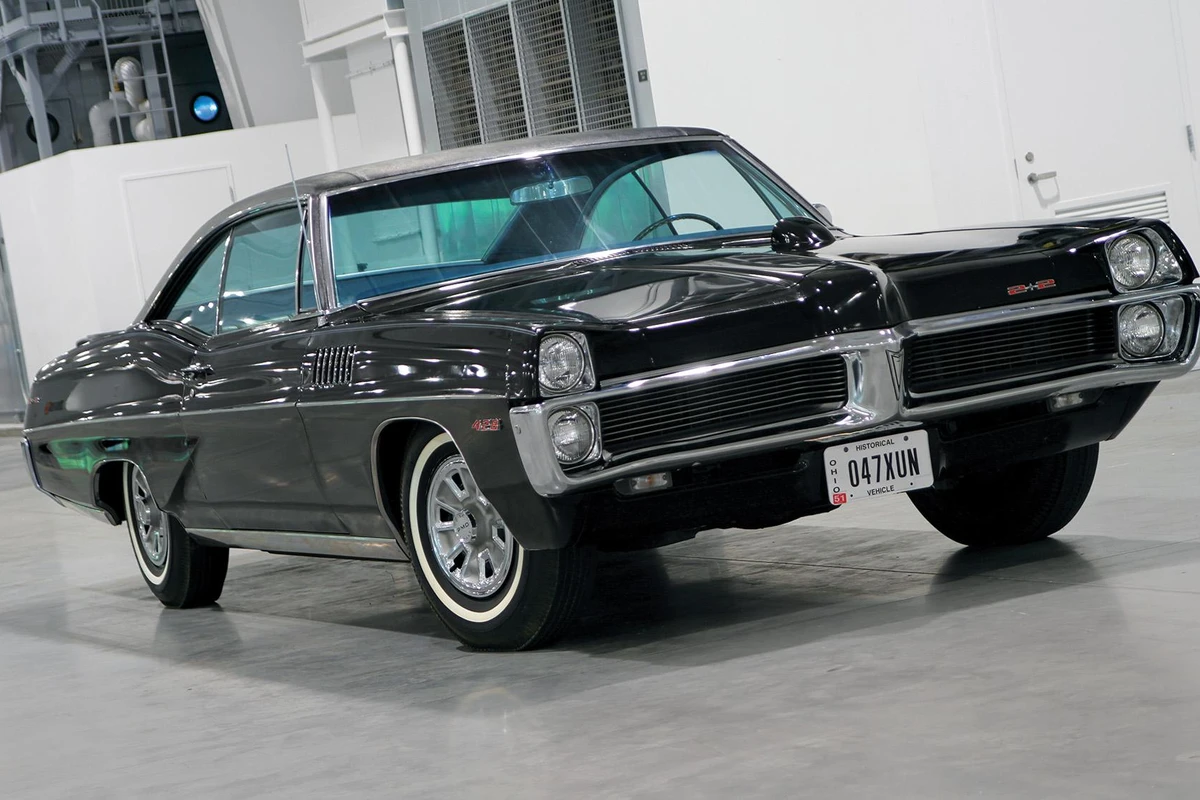
Named for the island off the coast of Southern California, for many years the Pontiac Catalina was the jack-of-all-trades for General Motors. It excelled as one of the earliest and most potent muscle cars, yet it could also be had with a low horsepower economy engine. In addition, Pontiac also created the Catalina convertible for those looking for luxury, as well as six or nine-seat passenger station wagons, marketed as Catalina Safaris. The ultra high-performance Catalina 2+2 was available from 1964–1967, and are some of the most sought out muscle cars today.
Pontiac Catalina Overview
The Pontiac Catalina lasted for more than three decades, from 1950–1981. From 1950–1958, the Catalina was only available as a trim option for the Pontiac Chieftain, Pontiac Super Chief (from 1954 on) and Star Chief. Originally, from 1950–1954, the Catalina used Pontiac’s 268 cid straight-eight engine making about 120 horsepower. From 1955 on, the Catalina used the larger 287 cid V8, making 180–200 horsepower.
In 1959, Pontiac essentially renamed the Chieftain and Super Chief models as the Catalina. From 1959–1964, the Pontiac Catalina was part of the sixth and seventh generations of Pontiac’s full-sized lineup, and had nearly identical options with the other full-sized Pontiacs like the Ventura, Star Chief, Executive, and Bonneville. The Catalina used either 389 or 421 cid V8 engines, with the most powerful versions making up to 410 horsepower and 480 lb-ft of torque.
From 1965–1970, the Pontiac Catalina was still considered part of the eighth and ninth generations of Pontiac’s full-sized lineup. As a result, they still had almost identical options as the other full-sized lineup cars. This included (from 1967 on) 400, 428, and 455 cid V8 engines, which could punch out as much as 390 horsepower and 465 lb-ft of torque.
The fifth generation of the Pontiac Catalina, now separate from the full-sized lineup though with similar options, lasted from 1971–1976. Largely due to emissions and fuel economy concerns, engine power output massively declined. This left the most powerful Catalina putting out just 200 horsepower in 1976, though it did make 345 lb-ft of torque.
The final generation of the Pontiac Catalina lasted from 1977–1981, and saw declining sales amid the introduction of a V6 and smaller (350 cid and smaller) V8 engines. Pontiac sold the last Catalina in 1981, discontinuing it with most of their other full-sized lineup for 1982.
1950–1958 Pontiac Catalina Trims
When Pontiac first introduced the Catalina to the public, they offered it as a trim option for the Series 25 (six-cylinder) and Series 27 (eight-cylinder) Pontiac Chieftain. At the time, Pontiac only had two models on the market, the Streamliner and the Chieftain, with the Chieftain utilizing General Motors’ A-body platform. Pontiac introduced the Catalina as a two-door hardtop version of the Chieftain, classifying it as a Super Deluxe model. The 1950 Pontiac Chieftain Catalina came in either San Pedro Ivory or Sierra Rust colors. A two-tone option of both paints was also an option. The interior was leather.
In 1954, Pontiac introduced the Catalina as a trim option for the new (Series 28) Star Chief. This was another application of the Catalina to the A-body, and it remained a two-door hardtop. In 1957, the Super Chief got the Catalina option, too. From 1950–1954, the Chieftain Catalina used the 268 cid Pontiac straight-eight engine. In 1955, Pontiac discontinued the straight-eight, replacing it with the 287 cid V8. For the 1955 model year, Pontiac priced the Chieftain Catalina at $2,335, while the Star Chief Catalina went for $2,499.
1959–1964 Pontiac Catalina (Series 21/23)
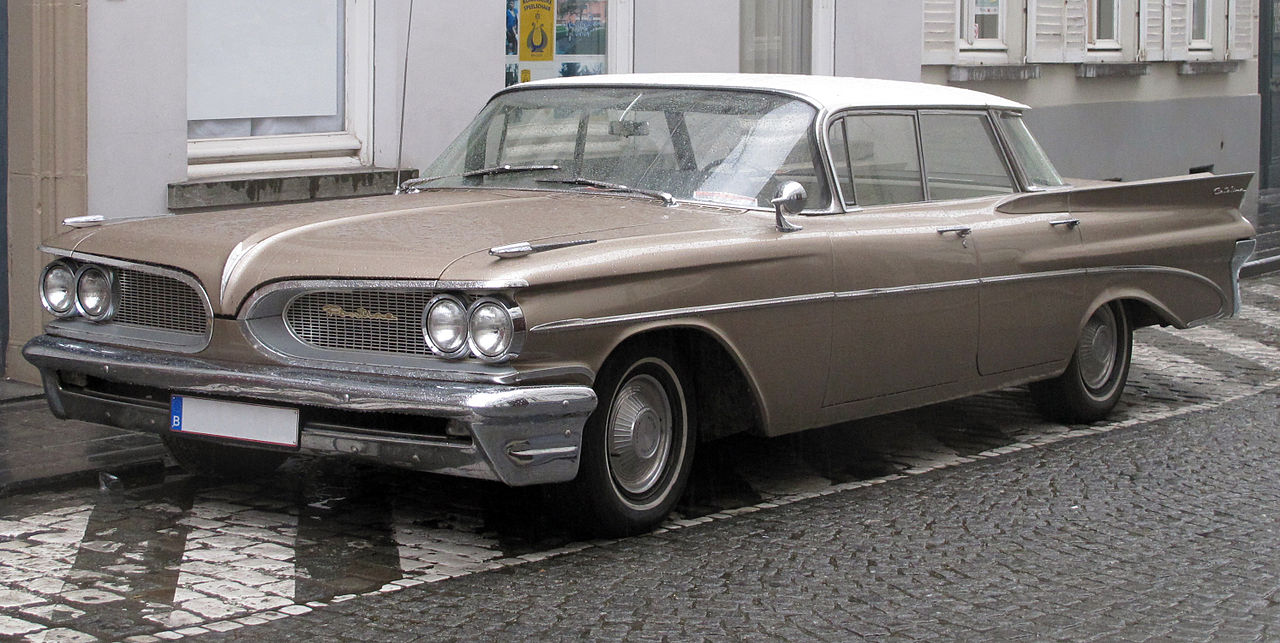
In 1959, Pontiac debuted the Catalina as a standalone model for the first time as they ditched the Chieftain name. For the first two years, the Catalina had the Pontiac internal code of Series 21, which switched to Series 23 in 1961. Pontiac offered the Catalina as either a four-door sedan or Vista, a two-door sedan or coupe, two-door convertible, or a four-door Safari Station Wagon. The Wagon could hold either 6-passengers standard or 9 with the optional third row seating.
From 1959–1964, the Pontiac Catalina was part of the sixth and seventh generations Pontiac’s full-sized lineup, and had nearly identical options with the other full-sized Pontiacs like the Ventura, Star Chief, Executive, and Bonneville. Differentiating the 1959 Pontiac Catalina from the 1958 Chieftain Catalina was a longer and lower body, twin-grille, twin-fin rear fenders, and a v contour hood. The grille changed in 1960 to a single instead of split, there were new longer side-moldings, and a new deck lid.
In 1961, the now Series 23 Pontiac Catalina got smaller and lighter by four inches and 200 pounds. The split-grille returned, there was a taller roofline, and horizontal-oval tail lamps. The next year, the 1962 Pontiac Catalina got a few inches bigger again, and the tail lamps became curved. Now, a Ventura trim was offered on two-doors. In 1963, styling changed again, emphasizing new clean square lines, angled roofs, upward curved tail lamps, and a recessed split-grille.
The 1964 Pontiac Catalina 2+2
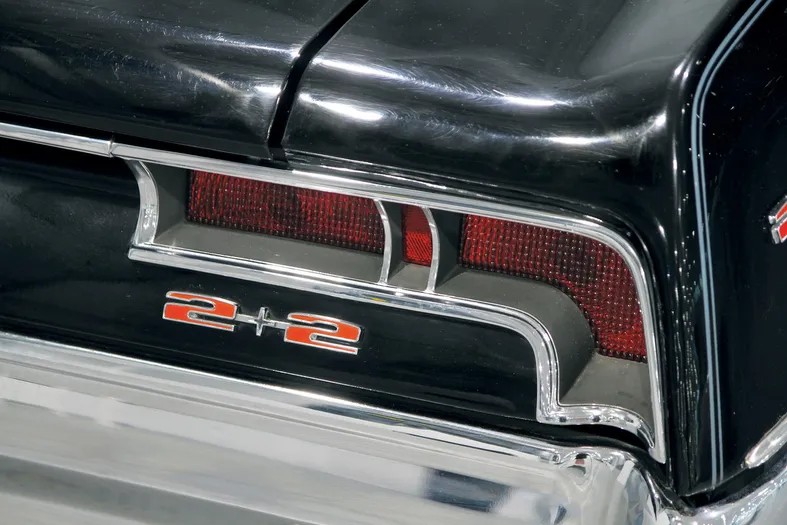
In 1964, Pontiac gave the Catalina full-facelift and introduced the now famous 2+2 option, which they marketed as the Pontiac GTO’s big brother. It did not sell particularly well compared with other Catalina models, and was only available as a hardtop coupe or convertible. The 2+2 Catalina had fake louvers on the fenders and quarter panels as well as special 2+2 badges. The base engine was a 283 horsepower 389 V8, but you could upgrade to the 320 or 330 horsepower 421 Super Duty V8.
1959–1964 Pontiac Catalina Engine Technical Specifications
| Model Years | Engine | Horsepower | Torque |
| 1959-1963 | 389 cid V8 (2bbl) | 215 horsepower | 390 lb-ft |
| 1959-1960 | 389 cid V8 (2bbl) | 245 horsepower | 392 lb-ft |
| 1959 | 389 cid V8 (4bbl) | 260 horsepower | 400 lb-ft |
| 1959 | 389 cid V8 (2bbl) | 280 horsepower | 408 lb-ft |
| 1959 | 389 cid V8 (4bbl) | 300 horsepower | 420 lb-ft |
| 1959-1960 | 389 cid V8 (Tri-Power) | 315 horsepower | 425 lb-ft |
| 1960 | 389 cid V8 (4bbl) | 281 horsepower | 408 lb-ft |
| 1960 | 389 cid V8 (2bbl) | 283 horsepower | 413 lb-ft |
| 1960-1961 | 389 cid V8 (4bbl) | 303 horsepower | 425 lb-ft |
| 1960-1962 | 389 cid V8 (Tri-Power) | 318 horsepower | 430 lb-ft |
| 1960-1962 | 389 cid V8 (4bbl) | 333 horsepower | 425 lb-ft |
| 1960-1962 | 389 cid V8 (Tri-Power) | 348 horsepower | 430 lb-ft |
| 1961-1964 | 389 cid V8 (2bbl) | 230 horsepower | 380 lb-ft |
| 1961-1964 | 389 cid V8 (4bbl) | 235 horsepower | 402 lb-ft |
| 1961-1964 | 389 cid V8 (2bbl) | 267 horsepower | 405 lb-ft |
| 1961 | 389 cid V8 (4bbl) | 287 horsepower | 417 lb-ft |
| 1961-1963 | 421 cid V8 (SD) (2x4bbl) | 405 horsepower | 425 lb-ft |
| 1962 | 389 cid V8 (4bbl) | 306 horsepower | 425 lb-ft |
| 1962 | 389 cid V8 (SD) (4bbl) | 385 horsepower | 450 lb-ft |
| 1963 | 389 cid V8 (Tri-Power) | 313 horsepower | 430 lb-ft |
| 1963 | 421 cid V8 (4bbl) | 353 horsepower | 455 lb-ft |
| 1963-1964 | 421 cid V8 (Tri-Power) | 370 horsepower | 460 lb-ft |
| 1963 | 421 cid V8 (SD) (4bbl) | 390 horsepower | 470 lb-ft |
| 1963 | 421 cid V8 (SD) (2x4bbl) | 410 horsepower | 480 lb-ft |
| 1964 | 389 cid V8 (2bbl) (2+2) | 283 horsepower | 413 lb-ft |
| 1964 | 389 cid V8 (Tri-Power) | 330 horsepower | 430 lb-ft |
| 1964 | 421 cid V8 (4bbl) | 320 horsepower | 455 lb-ft |
| 1964 | 421 cid V8 (Tri-Power) | 350 horsepower | 455 lb-ft |
1959–1964 Pontiac Catalina Engines and Performance
From 1959–1964, Pontiac relied primarily on their 389 cid V8 and 421 cid V8s to power the Catalina. You could really have your pick of the litter in terms of performance. Available was anything from a double-barrel 215 horsepower economy V8, all the way up to the Tri-Power 389 V8 making 315 horsepower and 425 lb-ft of torque. The Tri-Power was so called because the carburetor was actually three Rochester double-barrel carburetors put together to make a gigantic six-barrel.
The most powerful 389 Tri-Power V8 lasted from 1960–1962, and made 348 horsepower. In addition, in 1962 there was also a Super Duty version of the 389 V8, but only a few were sold. This version made an incredible 385 horsepower and 450 lb-ft of torque, partly thanks to a large four-barrel carb. The SD 389 V8 lasted for only one year, leaving the Tri-Power as the most powerful 389 for 1963–1964. In the 1964 2+2, the base engine was the 283 horsepower V8 used in the Star Chief, and optional engines were a 267 horsepower 389 V8, or a larger 421 Super Duty at either 330 or 320 horsepower.
In addition to the 389 V8, Pontiac also used various versions of their 421 cid V8 starting in 1961. In 1963, Pontiac put out the most powerful Catalinas ever with the 421 V8. The Super Duty 421 with two quad-barrel carburetors made either 405 or 410 horsepower, while the SD 421 with a single-four barrel made 390 horsepower. There were also 350 and 370 horsepower versions of the 421 Ti-Power from 1963–1964.
Transmission Options
Transmission wise buyers had two options, either a three-speed manual or a four-speed automatic. The three-speed had a column-mounted shifter, while the four-speed Super Hydra-Matic (Strato Flight) was an extra $180 in 1959. In 1960, Pontiac introduced a new four-speed manual midway through the year, but it was used almost exclusively in race models used in NASCAR. Also available was a Safe-T-Track non-slip differential.
1959–1964 Pontiac Catalina Production Numbers
| Model Year | Bodystyle | Production Total |
| 1959 | 4-Door Sedan | 72,377 |
| 4-Door Vista | 45,012 | |
| 2-Door Sedan | 26,102 | |
| 2-Door Coupe | 38,309 | |
| 2-Door Convertible | 14,515 | |
| 4-Door Safari (6) | 21,162 | |
| 4-Door Safari (9) | 14,084 | |
| 1959 Total | 231,561 | |
| 1960 | 4-Door Sedan | 72,650 |
| 4-Door Vista | 32,710 | |
| 2-Door Sedan | 25,504 | |
| Hardtop Coupe | 27,496 | |
| Convertible | 17,172 | |
| 4-Door Safari (6) | 14,149 | |
| 4-Door Safari (9) | 21,253 | |
| 1960 Total | 210,934 | |
| 1961 | 4-Door Sedan | 38,638 |
| 4-Door Vista | 17,589 | |
| 2-Door Sedan | 9,846 | |
| Hardtop Coupe | 14,524 | |
| Convertible | 12,379 | |
| 4-Door Safari (6) | 7,783 | |
| 4-Door Safari (9) | 12,595 | |
| 1961 Total | 113,354 | |
| 1962 | 4-Door Sedan | 68,124 |
| 4-Door Vista | 29,251 | |
| 2-Door Sedan | 14,263 | |
| Hardtop Coupe | 46,024 | |
| Convertible | 16,877 | |
| 4-Door Safari (6) | 10,716 | |
| 4-Door Safari (9) | 19,399 | |
| 1962 Total | 204,654 | |
| 1963 | 2-Door Sedan | 14,091 |
| 4-Door Sedan | 79,961 | |
| 2-Door Hardtop | 60,795 | |
| 4-Door Vista | 31,256 | |
| 2-Door Convertible | 18,249 | |
| 4-Door Safari (6) | 18,446 | |
| 4-Door Safari (9) | 11,751 | |
| 1963 Total | 234,549 | |
| 1964 | 4-Door Sedan | 84,457 |
| 4-Door Hardtop | 33,849 | |
| 2-Door Sedan | 12,480 | |
| 2-Door Hardtop | 74,793 | |
| 2-Door Convertible | 18,693 | |
| 4-Door Safari (6) | 13,140 | |
| 4-Door Safari (9) | 20,356 | |
| Catalina 2+2 | 7,998 | |
| 1964 Total | 257,768 | |
| 1959-1964 Total | 1,252,826 |
The 1959 Pontiac Catalina debuted to terrific sales, crushing the previous years’ combined Chieftain and Super Chief sales (130,034) by more than 100,000 units. Sales stayed solid for another year, before a brief one-year decline in 1961. By 1962, the Catalina was back on track, and by 1963 they had completely recovered, and then some.
The final Series 23 Catalina for 1964 was the highest selling Catalina yet, surpassing ¼ of a million units. Of these, just a shade under 8,000 were the new 2+2 option. For the first six years of the Catalina, Pontiac sold more than 1.25 million units, showing it to be a serious draw.
1965–1970 Pontiac Catalina (Series 252/258)
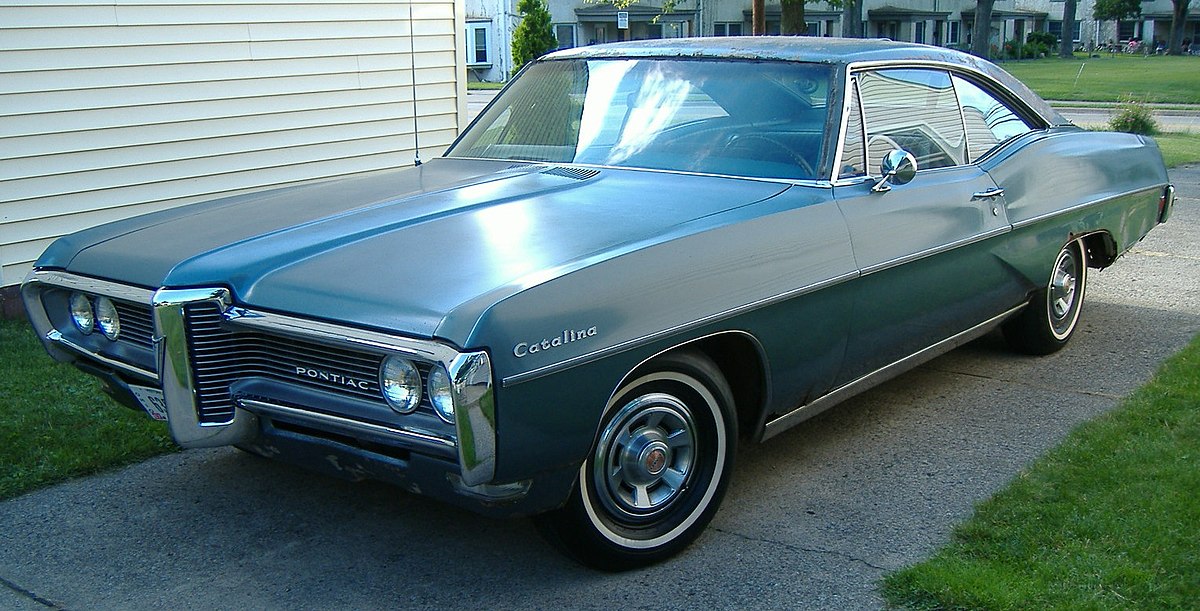
From 1965–1970, Pontiac considered the Catalina part of its full-sized lineup still, so they got pretty much the same options as the Ventura, Star Chief, Executive, and Bonneville, like before. The overall styling of the car changed, as the bodies got much larger, and there were new V-shaped hoods with center bulges. The side glass was curved, front fender badges were V-shaped, and the headlights were vertically stacked and barrel-shaped, and located under cut-back front fenders.
After few changes in 1966, the 1967 Pontiac Catalina go the “wasp waist” body styling, wood-grain trimmed dashboards, small hubcaps, and a Pontiac badge in the left-side grille. The 1968 Pontiac Catalina got peripheral front bumpers, pointed noses, new interiors, and safety features were now standard. Those who got the Safari or convertible body styles got Morrokide vinyl interior, and the 9-passenger Safaris got a power tailgate window.
For 1969, Pontiac gave the Catalina split-bumpers, ventless windows, a longer wheelbase, and the famous GM Endura rubber front bumper inserts. They updated the Safari wagons to have two-way tailgates while maintaining the power windows. The 1970 Catalina bumper and grille looked inspired by the Grand Prix, but mostly stayed the same.
The 1965–1967 Pontiac Catalina 2+2
Pontiac continued the 2+2 sports package for 1965, albeit with some upgrades. Those who got the package got “421” badges on the front fenders, as well as 2+2 numbering on the rear fenders, deck lid, and fake louvers. In addition, the engine packages came with low-restriction exhausts, chrome air-cleaner and valve covers, as well as a Hurst three-speed transmission linkage.
In 1966, Pontiac made the 2+2 a standalone model, though it was also available as a Catalina option still. It only lasted for two years, before Pontiac retired for the 1968 model year. From 1967–1970, Canada got a version of the 2+2 on the Parisienne. They generally featured smaller displacement engines, but they still made great power.
Available Catalina 2+2 and stand alone 2+2 engines were a 421 V8 making 338 horsepower, a 421 Tri-Power V8 at 356 horsepower, or a high-output 421 Tri-Power V8 making 376 horsepower. In 1967, Pontiac dropped the 421 V8s in favor of 428 cid V8s. There were two power outputs, 360 or 375 horsepower, and they both used Rochester QuadraJet carburetors.
1965–1970 Pontiac Catalina Engine Technical Specifications
| Model Years | Engine | Horsepower | Torque |
| 1965-1966 | 389 cid V8 (2bbl) | 256 horsepower | 388 lb-ft |
| 1965-1966 | 389 cid V8 (2bbl) | 290 horsepower | 418 lb-ft |
| 1965 | 389 cid V8 (4bbl) | 325 horsepower | 429 lb-ft |
| 1965 | 389 cid V8 (4bbl) | 333 horsepower | 429 lb-ft |
| 1965 | 389 cid V8 (Tri-Power) | 338 horsepower | 433 lb-ft |
| 1965-1966 | 421 cid V8 (4bbl) | 338 horsepower | 459 lb-ft |
| 1965-1966 | 421 cid V8 (Tri-Power) | 356 horsepower | 459 lb-ft |
| 1965-1966 | 421 cid V8 (Tri-Power) | 376 horsepower | 460 lb-ft |
| 1966 | 389 cid V8 (Tri-Power) | 360 horsepower | 460 lb-ft |
| 1967-1970 | 400 cid V8 (2bbl) | 265 horsepower | 397 lb-ft |
| 1967-1970 | 400 cid V8 (2bbl) | 290 horsepower | 428 lb-ft |
| 1967 | 400 cid V8 (4bbl) | 325 horsepower | 440 lb-ft |
| 1967-1969 | 428 cid V8 (4bbl) | 360 horsepower | 472 lb-ft |
| 1967-1968 | 428 cid V8 (4bbl) | 376 horsepower | 462 lb-ft |
| 1968-1969 | 400 cid V8 (4bbl) | 340 horsepower | 455 lb-ft |
| 1968-1969 | 428 cid V8 (4bbl) | 390 horsepower | 465 lb-ft |
| 1970 | 455 cid V8 (4bbl) | 360 horsepower | 500 lb-ft |
| 1970 | 455 cid V8 (4bbl) | 370 horsepower | 500 lb-ft |
1965–1970 Pontiac Catalina Engines, Transmissions, and Performance
For 1965–1966, Pontiac kept the 389 and 421 V8s as the available options. For 1965, the most powerful 389 V8 was the Tri-Power, which made 348 horsepower. The next year, the 389 Tri-Power jumped up to 360 horsepower. There were also two versions of the 421 Tri-Power V8, at 356 or 376 horsepower.
Starting in 1967, Pontiac dropped the 389 and 421 V8s from the Catalina lineup. In their place were the large 400 cid and 428 cid V8s. The most powerful 400 cid V8 made 325 horsepower for 1967 and 340 horsepower for 1968–1969. For the 1970 Pontiac Catalina, the 400 cid V8 dropped to either 265 or 290 horsepower (depending on transmission, manuals made more power). Pontiac also introduced the larger 455 cid V8 for 1970. Strapped with a four-barrel carburetor, in the Safari Catalinas they made 370 horsepower – or 360 horsepower in other body styles.
Transmission options included a three-speed manual and two different automatic transmissions, a two-speed and a three-speed. The two-speed was the short lived Super Turbine 300, while the other was the Turbo Hydra-Matic 400.
1965–1970 Pontiac Catalina Production Numbers
| Model Year | Bodystyle | Production Total |
| 1965 | 4-Door Sedan | 78,853 |
| 4-Door Hardtop | 34,814 | |
| 2-Door Sedan | 9,526 | |
| 2-Door Hardtop | 92,009 | |
| 2-Door Convertible | 18,347 | |
| 4-Door Safari (6) | 15,110 | |
| 4-Door Safari (9) | 22,399 | |
| Catalina 2+2 | 11,521 | |
| 1965 Total | 271,058 | |
| 1966 | 4-Door Sedan | 80,483 |
| 4-Door Hardtop | 38,005 | |
| 2-Door Sedan | 7,925 | |
| 2-Door Hardtop | 79,013 | |
| 2-Door Convertible | 14,837 | |
| 4-Door Safari (6) | 21,082 | |
| 4-Door Safari (9) | 12,965 | |
| Catalina 2+2 | 6,383 | |
| 1966 Total | 254,310 | |
| 1967 | 4-Door Sedan | 80,551 |
| 4-Door Hardtop | 37,256 | |
| 2-Door Sedan | 5,633 | |
| 2-Door Hardtop | 77,932 | |
| 2-Door Convertible | 10,033 | |
| 4-Door Safari (6) | 11,040 | |
| 4-Door Safari (9) | 18,305 | |
| Catalina 2+2 | 1,768 | |
| 1967 Total | 240,750 | |
| 1968 | 4-Door Hardtop | 136,168 |
| 2-Door Sedan | 5,247 | |
| 2-Door Hardtop | 92,217 | |
| 2-Door Convertible | 7,339 | |
| 4-Door Safari (9) | 13,363 | |
| 4-Door Safari (6) | 21,848 | |
| 1968 Total | 276,182 | |
| 1969 | 4-Door Sedan | 48,590 |
| 4-Door Hardtop | 38,819 | |
| 2-Door Hardtop | 84,006 | |
| 2-Door Convertible | 5,436 | |
| 4-Door Safari (9) | 13,393 | |
| 4-Door Safari (6) | 20,352 | |
| 1969 Total | 210,596 | |
| 1970 | 4-Door Sedan | 84,795 |
| 4-Door Hardtop | 35,155 | |
| 2-Door Hardtop | 70,350 | |
| 2-Door Convertible | 3,686 | |
| 4-Door Safari (9) | 12,450 | |
| 4-Door Safari (6) | 16,944 | |
| 1970 Total | 223,380 | |
| 1965-1967 Total | 1,476,275 |
For 1965–1970, production on the Pontiac Catalina was very consistent, never dipping below 210,000 units per year. The four-door hardtop was usually the most popular option. This contributed to Pontiac selling more than 200,000 more Catalinas from ‘65–’70 than from ‘59–’64. The Catalina 2+2 options never sold particularly well, facing a nearly 90% decline from ‘65–’67.
Note: Official Pontiac Production numbers do not include Safari Station Wagons. However, all Catalina models are included in the above figures.
1971–1976 Pontiac Catalina (Series 252/2L/2BL)
Starting in 1971, Pontiac split their full-sized lineup into individual car segments, creating what is essentially the fifth generation Pontiac Catalina. The styling got major revisions, as new “fuselage” bodies replaced the more “coke bottle” shape that came out in 1965. The split V-shaped radiator grilles got larger, and Morrokide upholstery became standard on most models.
Also in 1971 was the introduction of the Catalina Brougham. This was basically the same thing as the standard Catalina, but had luxury upholstery, an electric clock, Castilian leather appearance instrument panel inserts, deluxe wheel covers, and a Brougham script on the rear roof pillar.
In 1972, Pontiac switched the Catalina from the internal designation of Series 252 to the 2L. They also gave the Catalina energy-absorbing bumpers, revised tail lights, and redesigned radiator grilles. This also marked the last year for both the convertible and short lived Brougham option. For the 1973 Catalina, Pontiac used full-width grilles and now put Catalina script behind the front wheel wells.
In 1974, the Catalina carried the internal series of 2BL for Pontiac, and they dropped the two-door coupe option. The car was restyled again, including two-piece rectangular parking lamps set into the front panel under the headlights. Pontiac, Catalina, and engine displacement scripts also appeared on the sides. 1974 Catalina Safari station wagons had glide-away tailgates, power windows, and a split-back seat and rear-facing third seat.
Pontiac redesigned the roofline in 1975 and gave the Catalina a wider and more distinct grille. Triple-stacked tail lights were new, as was a radial-tuned suspension system. The 1976 Pontiac Catalina became the Series 2B internally, and was very similar to the Bonneville styling-wise.
1971–1976 Pontiac Catalina Engine Technical Specifications
| 1971 | 350 cid V8 (2bbl) | 250 horsepower | 350 lb-ft |
| 1971 | 400 cid V8 (2bbl) | 265 horsepower | 400 lb-ft |
| 1971 | 400 cid V8 (4bbl) | 300 horsepower | 400 lb-ft |
| 1971 | 455 cid V8 (2bbl) | 280 horsepower | 455 lb-ft |
| 1971 | 455 cid V8 (4bbl) | 325 horsepower | 455 lb-ft |
| 1972 | 350 cid V8 (2bbl) | 175 horsepower | 275 lb-ft |
| 1972 | 400 cid V8 (2bbl) | 175 horsepower | 310 lb-ft |
| 1972-1974 | 400 cid V8 (4bbl) | 200 horsepower | 325 lb-ft |
| 1972-1973 | 400 cid V8 (4bbl) | 250 horsepower | 325 lb-ft |
| 1972 | 455 cid V8 (2bbl) | 185 horsepower | 350 lb-ft |
| 1972 | 455 cid V8 (2bbl) | 200 horsepower | 370 lb-ft |
| 1972 | 455 cid V8 (4bbl) | 220 horsepower | 350 lb-ft |
| 1972-1973 | 455 cid V8 (4bbl) | 250 horsepower | 370 lb-ft |
| 1973 | 350 cid V8 (2bbl) | 150 horsepower | 270 lb-ft |
| 1973 | 400 cid V8 (2bbl) | 170 horsepower | 320 lb-ft |
| 1973 | 400 cid V8 (2bbl) | 185 horsepower | 320 lb-ft |
| 1973-1974 | 455 cid V8 (4bbl) | 250 horsepower | 370 lb-ft |
| 1974 | 400 cid V8 (2bbl) | 175 horsepower | 315 lb-ft |
| 1974 | 400 cid V8 (2bbl) | 190 horsepower | 315 lb-ft |
| 1974 | 400 cid V8 (4bbl) | 225 horsepower | 320 lb-ft |
| 1974 | 455 cid V8 (4bbl) | 215 horsepower | 355 lb-ft |
| 1975 | 400 cid V8 (2bbl) | 170 horsepower | 305 lb-ft |
| 1975 | 400 cid V8 (4bbl) | 175 horsepower | 310 lb-ft |
| 1975-1976 | 455 cid V8 (4bbl) | 200 horsepower | 345 lb-ft |
| 1976 | 350 cid V8 (2bbl) | 155 horsepower | 280 lb-ft |
| 1976 | 400 cid V8 (2bbl) | 185 horsepower | 310 lb-ft |
1971–1976 Pontiac Catalina Engines, Transmissions, and Performance
Starting in 1971 and continuing until the Catalina’s demise a decade later, Pontiac started downgrading the power outputs. That year, the most powerful engine was the 455 V8 making 325 horsepower. However, starting in 1972 Pontiac was forced to begin listing engine outputs in SAE Net instead of SAE Gross figures. While this did not make the engines any less powerful, they appeared that way because now they had to account for parasitic losses.
As a result, the most powerful engine in 1972 was a four-barrel 455 V8 that made 250 horsepower. Even though it was very similar to the 325 horsepower version from the year before, marketing surrounding it was impossible, and most people assumed it was woefully underpowered. By 1976, the 455 V8 made just 200 horsepower maximum. Other contributing factors were oil shortages and environmental concerns, which caused most American manufacturers to opt for less displacement.
The 400 V8 stayed as the main engine in the Catalina, and various 350 cid V8s were also used. No longer were there any Tri-Power options available, and most engines could not top 200 horsepower SAE Net. For 1971, all of the manual transmission options were dropped, leaving just the three-speed Turbo Hydra-Matic option available for the rest of the Catalina’s lifespan.
1971–1976 Pontiac Catalina Production Numbers
| Model Year | Bodystyle | Production Total |
| 1971 | 4-Door Sedan | 59,355 |
| 4-Door Hardtop | 22,333 | |
| 2-Door Hardtop | 46,257 | |
| 2-Door Convertible | 2,036 | |
| 4-Door Safari (6) | 10,322 | |
| 4-Door Safari (9) | 9,283 | |
| 1971 Total | 149,586 | |
| 1972 | 4-Door Sedan | 83,004 |
| 4-Door Hardtop | 28,010 | |
| 2-Door Hardtop | 60,233 | |
| 2-Door Convertible | 2,399 | |
| 4-Door Sedan (Brougham) | 8,007 | |
| 4-Door Hardtop (Brougham) | 8,762 | |
| 2-Door Hardtop (Brougham) | 10,545 | |
| 1972 Total | 228,262 | |
| 1973 | 4-Door Sedan | 100,592 |
| 4-Door Hardtop | 31,663 | |
| 2-Door Hardtop | 74,394 | |
| 4-Door Safari (9) | 14,654 | |
| 4-Door Safari (6) | 15,762 | |
| 1973 Total | 237,065 | |
| 1974 | 4-Door Sedan | 46,025 |
| 4-Door Hardtop | 11,769 | |
| 2-Door Hardtop | 40,657 | |
| 4-Door Safari (9) | 6,486 | |
| 4-Door Safari (6) | 5,662 | |
| 1974 Total | 110,599 | |
| 1975 | 4-Door Sedan | 40,398 |
| 2-Door Hardtop | 40,657 | |
| 4-Door Safari (9) | 4,992 | |
| 4-Door Safari (6) | 3,964 | |
| 1975 Total | 90,011 | |
| 1976 | 2-Door Hardtop | 15,262 |
| 4-Door Sedan | 47,235 | |
| 4-Door Safari (6) | 4,735 | |
| 4-Door Safari (9) | 5,513 | |
| 1976 Total | 72,745 | |
| 1971-1976 Total | 888,268 |
For the fifth generation Pontiac Catalina, really only the 1972–1973 model years were successful. Every other year saw sales decline to below 200,000 units, bottoming out at under 100,000 by 1975. This was a drop in nearly 200,000 from the peak year of 1968, when more than ¼ of a million were sold. Over the same-length six-year period, Pontiac sold under 1 million Catalinas for the first time, a drop of more than half-a-million over 1965–1970. The Catalina was in trouble.
Note: Official Pontiac Production numbers do not include Safari Station Wagons. However, all Catalina models are included in the above figures.
1977–1981 Pontiac Catalina
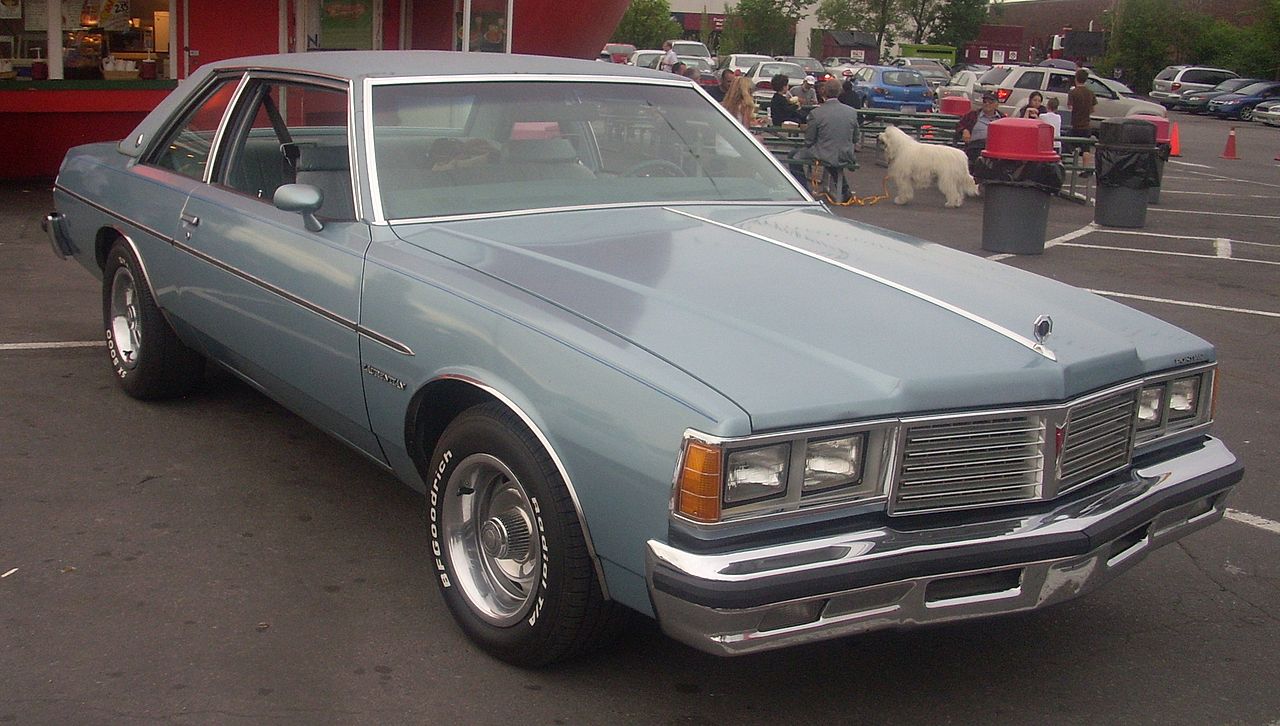
The sixth and final generation of the Pontiac Catalina lasted from 1977–1981, after which Pontiac dropped it from the lineup for good. The 1977 Pontiac Catalina was smaller than before and weighed a lot lighter, resulting in much more headroom and rear legroom for passengers. Pontiac raised the roofing and gave it rectangular headlamps, as well as a Freedom battery and brushed-knit cloth interior. If you bought a four-door coupe/sedan or Safari, a CB radio was standard.
Not much changed for 1978, with the two-door hardtop coupe being brought back the following year in 1979. The grille, head, side, and tail lamps were all new, except wagons which kept their tail lamps from 1978. Pontiac downsized the Catalina again in 1980, also making it lighter, too. Part of this was to accommodate the smaller and less powerful engines now being used. Even though it was shorter it actually looked longer, thanks to the rear and front overhang design.
The final year 1981 Pontiac Catalina featured a new grille and bumper design, but not much else changed. Pontiac dropped the Catalina for 1982 along with the rest of the full-sized lineup. The similar Bonneville still remained, though in a much smaller G-Body.
1977–1981 Pontiac Catalina Engine Technical Specifications
| Model Years | Engine | Horsepower | Torque |
| 1977-1979 | 3.8L (231 cid) V6 (2bbl) | 105 horsepower | 185 lb-ft |
| 1977 | 5.0L (301 cid) V8 (2bbl) | 135 horsepower | 240 lb-ft |
| 1977-1978 | 5.7L (350 cid) V8 (4bbl) (Chevy) | 170 horsepower | 270 lb-ft |
| 1977-1978 | 5.7L (350 cid) V8 (4bbl) (Olds) | 170 horsepower | 275 lb-ft |
| 1977 | 5.7L (350 cid) V8 (4bbl) | 170 horsepower | 280 lb-ft |
| 1977-1978 | 6.6L (400 cid) V8 (4bbl) | 180 horsepower | 325 lb-ft |
| 1977 | 6.6L (403 cid) V8 (4bbl) (Olds) | 185 horsepower | 320 lb-ft |
| 1978-1980 | 5.0L (301 cid) V8 (2bbl) | 140 horsepower | 235 lb-ft |
| 1978-1979 | 5.7L (350 cid) V8 (4bbl) | 155 horsepower | 280 lb-ft |
| 1979 | 5.0L (301 cid) V8 (2bbl) | 150 horsepower | 240 lb-ft |
| 1979-1980 | 5.7L (350 cid) V8 (4bbl) | 160 horsepower | 260 lb-ft |
| 1980-1981 | 5.7L (350 cid) V8 (MFI) (Olds) (Diesel) | 105 horsepower | 205 lb-ft |
| 1980-1981 | 4.3L (265 cid) V8 (2bbl) | 120 horsepower | 210 lb-ft |
| 1980-1981 | 3.8L (231 cid) V6 (2bbl) | 110 horsepower | 190 lb-ft |
| 1981 | 5.0L (301 cid) V8 (4bbl) | 135 horsepower | 235 lb-ft |
| 1981 | 5.0L (307 cid) V8 (4bbl) | 145 horsepower | 240 lb-ft |
1977–1981 Pontiac Catalina Engines, Transmissions, and Performance
Starting in 1977, Pontiac started using liters instead of cubic inches (cid) for engine displacement. This was part of a larger effort to switch to the metric system – which never ended up happening – and engine displacement sizing in liters stuck. For 1977, Pontiac still offered 350 and 400 cid V8s, but they were woefully underpowered and dropped following 1978.
For the 1977 Catalina, Pontiac offered the first six-cylinder engine since the Catalina was just a trim option for the 1954 Chieftain. This time, instead of an inline-six it was a 2.3 liter V6, and it made 105 horsepower and 185 lb-ft of torque. Pontiac bumped this up to 110 horsepower and 190 lb-ft in 1980. Largely due to emissions restrictions in California, Pontiac offered the Catalina with a variety of 5.7 liter V8 engines. The Chevy and Oldsmobile 5.7 V8s were sold exclusively to California Catalina buyers.
From 1980–1981, Pontiac also offered the Oldsmobile 5.7 liter diesel V8, making 105 horsepower and 205 lb-ft of torque. Despite heavy marketing, the Oldsmobile diesel has garnered one of the worst reputations among diesel engines ever made. Many people blame the Oldsmobile diesel for souring the country on diesel engines before they could really be put into widespread production.
By this point, performance was a thing of the past, and the most powerful engine in 1981 made just 145 horsepower. The Catalina was firmly past its muscle car era by this point, having left that behind with the large displacement V8s. Once again, the only available transmissions were automatic: A three-speed Turbo Hydra-Matic 200, four-speed Turbo Hydra-Matic 200-4R, and a three-speed Turbo Hydra-Matic 350.
1977–1981 Pontiac Catalina Production Numbers
| Model Year | Bodystyle | Production Total |
| 1977 | 2-Door Hardtop | 14,752 |
| 4-Door Sedan | 46,926 | |
| 4-Door Safari (6) | 13,058 | |
| 1977 Total | 74,736 | |
| 1978 | 2-Door Hardtop | 9,224 |
| 4-Door Sedan | 39,707 | |
| 4-Door Safari (6) | 12,819 | |
| 1978 Total | 61,750 | |
| 1979 | 2-Door Hardtop | 5,410 |
| 4-Door Sedan | 28,121 | |
| 4-Door Safari (6) | 13,353 | |
| 1979 Total | 46,884 | |
| 1980 | 2-Door Hardtop | 3,319 |
| 4-Door Sedan | 10,408 | |
| 4-Door Safari (6) | 2,931 | |
| 1980 Total | 16,658 | |
| 1981 | 2-Door Hardtop | 1,074 |
| 4-Door Sedan | 6,456 | |
| 4-Door Safari (6) | 2,912 | |
| 1981 Total | 10,442 | |
| 1977-1981 Total | 210,470 |
By the sixth generation of the Pontiac Catalina, production had severely declined from its highs in the late-’60s. Every year production declined more and more, until barely 10,000 were made in 1981. For the entire five year period, Pontiac sold just 210,470. This was roughly 27,000 less than they had sold in 1973 alone, showing most buyers had soured on the Catalina by then.
Note: Official Pontiac Production numbers do not include Safari Station Wagons. However, all Catalina models are included in the above figures.
*Thanks to John Gunnell’s “Standard Catalog of Pontiac” for all production figures, most styling information, and most engine specifications.